science, Technical knowledge, Technical knowledge, Technology, Uncategorized

What is the Oort cloud: the very edge of the solar system (Raj78verma)

At the edge of the Sun’s gravitational influence, there’s a cloud of ice and rock. Probably.

Every system needs a boundary, and the Solar System is no different. Although we haven’t been able to physically reach and see it, we have a theory about what this edge looks like. And its name is the Oort cloud.
Ask anyone on the street where the Solar System ends, and they’re likely to mention Pluto. To a certain extent, it wouldn’t be wrong; Pluto really is the farthest planet / dwarf planet from the Sun. But if we want to be all sciency about it — and we do — the Solar System arguably ends where our star’s gravitational influence becomes too weak to capture and hold objects. In other words, it spans over all the space where the Sun is the dominating tidal force (Smoluchowski, Torbett, 1984). Exactly what constitutes the edge of the Solar System is still up to some debate, however, and some sources — including this post by NASA — consider the space beyond the heliosphere as being ‘interstellar space’.

For the purposes of this post, however, we’ll take the volume where the Sun’s gravity reigns supreme as being the Solar System. The point where that influence ends is far, far away from Earth. So far away, in fact, that we’ve never been able to actually see it, and, realistically speaking, there’s no way humanity will reach there while any of us reading this are still alive. But we do have some theories regarding what goes on out there.

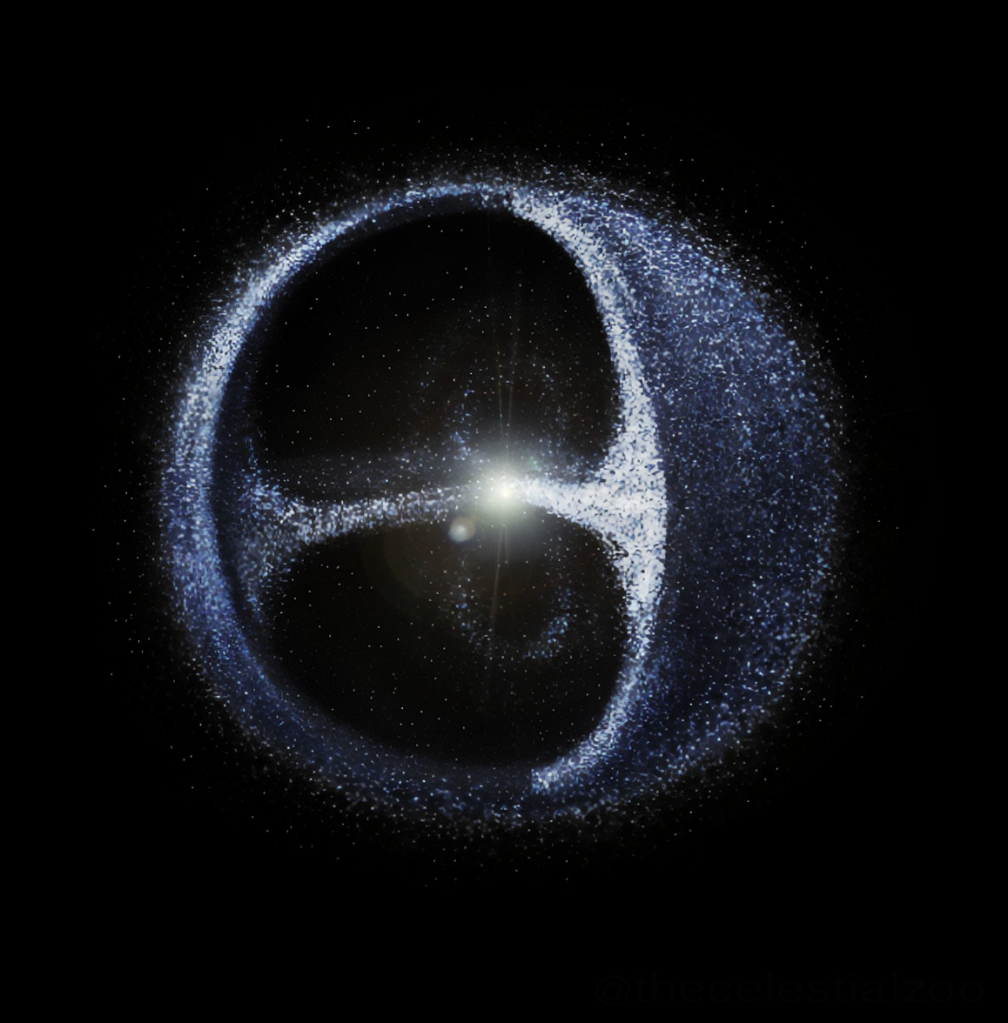
The boundary of the Solar System is marked by a hypothetical structure known as the Oort cloud. We estimate that it is a truly vast expanse filled with varied clusters of ice, from innumerable tiny chunks up to a few billion planetesimals of around 20 kilometers (12 mi) in diameter. There are likely a few rocky or metallic asteroids here, as well, but not many in number. The material in the Oort cloud was likely drawn to its current position through the gravitational influence of the gas giants — Jupiter, Saturn, Neptune, and Uranus — in the early days of the Solar System.

So what is it?
The thing to keep in mind here is that the Oort cloud is a hypothetical structure. We haven’t yet seen it, nor do we have any direct evidence of it being real. But its existence would fit with other elements and phenomena we see in the Solar System, and it does fit our theoretical understanding of the world around us, as well.

The Oort cloud is a vast body. Since it’s a theoretical structure, there’s quite a bit of uncertainty in our estimates of its size. Still, we believe it stretches from around 0.03 to 0.08 light-years from the Sun, although other estimates put its outer boundary at 0.8 light-years from the Sun. There are also estimates that place it between 1.58 and 3.16 light-years away from the Sun. Needless to say, we don’t have a good handle on exactly where it is, and how large it is.

“It is like a big, thick-walled bubble made of icy pieces of space debris the sizes of mountains and sometimes larger. The Oort Cloud might contain billions, or even trillions, of objects, ” NASA explains.

But to give you a rough idea of the distances involved, however, we’ll use Voyager 1, the fastest-going probe we’ve ever sent to space, and the one currently farthest away from Earth. On its current course and acceleration, Voyager 1 would reach the Oort cloud in around 300 years; it would take it some 30,000 years to pass through the cloud (depending on its actual dimensions).

Still, don’t get too excited. None of the space probes humanity has launched so far will still be operational by the time they reach the Oort cloud; despite being powered by RTGs, a type of nuclear battery, all of these crafts will run out of power far before they reach the Oort clour.

Why do we think it’s a thing?
The concept of the Oort cloud was first suggested in the 1930s by Estonian astronomer Ernst Öpik. The idea was cemented in the 1950s when its existence was independently suggested a second time by Jan Oort, a Dutch astronomer. Because of this dual origin, it is sometimes referred to as the Öpik–Oort cloud.

The existence of this cloud was proposed mainly due to comets — long-period and Halley-type comets, to be precise. Since comets coming close to the Sun lose part of their volatile contents (for example water) under the influence of solar radiation, logic dictates that they must form away from the star. At the same time, gravitational influences would see them either collide with a planet or star or be ejected from the Solar System eventually — meaning that their ‘lifespan’ is limited. Since there are still comets zipping around the Sun, this means that there must be a reservoir of comets to be drawn towards our star.

Put together, both of these point to the existence of a cloud-like formation at the very edge of the Sun‘s gravitational influence populated with comet-like bodies — the Oort cloud.

Short-period comets orbit around the Sun every few hundreds of years; because of this short time, it’s generally accepted that they originate from structures closer to Earth, such as the Kuiper belt (a field of asteroids extending past Neptune). Long-period comets, however, can have orbits lasting thousands of years. The only source that could explain such huge spans of time is the Oort cloud. One exception to these rules is Halley-type comets. Although they are short-period comets, we believe they’re originally from the Oort cloud and that they’ve been pulled ever closer to the center of the Solar System under the gravitational effects of the Sun and inner planets.

What are we doing to study it?
The main impediment to our studying of the Oort cloud is distance. It’s simply too far away for our spaceships or probes to reach in any practical manner. There also haven’t been any direct observations of the Oort cloud.

Despite this, its existence is widely accepted in academic circles. Researchers rely on indirect methods of study to peer into the secrets of the Oort cloud. These revolve heavily around the study of comets and their properties. There is also a lot of effort being poured into developing devices and methods that can be used to spot individual bodies inside the Oort cloud. This is no easy feat, as they’re quite tiny by cosmological standards, and very far away.

Once we do have such tools at our disposal, however, astronomers will finally be able to confirm whether the Oort cloud actually exists. It’s very likely that it does, and it would fit with our current understanding of the Universe. But until we can see it, we won’t be able to tell for sure

Posted by Technical Mechzone
science, Technical knowledge, Technical knowledge, Technology, Uncategorized

Does our Solar System have a wall?

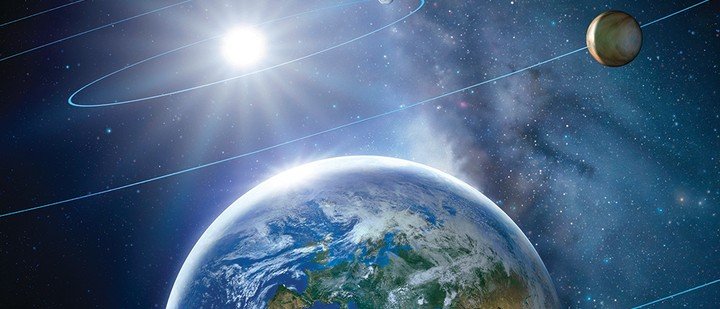
Marking the boundary of our Solar System and interstellar space, this ‘wall’ provides important protection for the Earth.

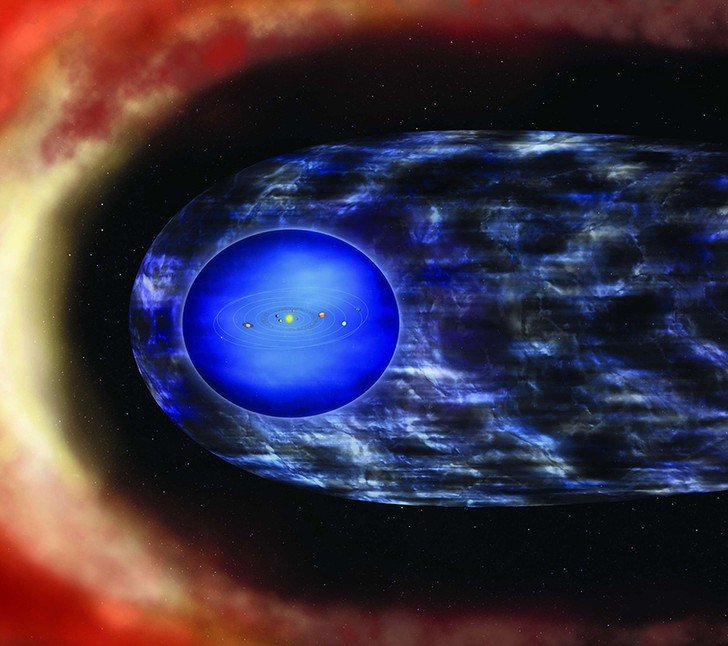
Yes and no. True, scientists sometimes describe the rise in temperature at the Solar System’s ‘heliopause’ as a wall. This is the region of space where the ‘solar wind’ – the constant stream of mostly protons, electrons, and alpha particles emitted by the Sun – is no longer strong enough to push back the ‘wind’ of particles coming from distant stars. Here, the hot, tenuous solar wind plasma (ionised gas) gives way to the colder, denser ‘interstellar medium’ (ISM).

The Sun causing a bow shock (orange) as its solar wind (blue) collides with interstellar medium (gas, dust and other matter between star systems) © Science Photo Library

The heliopause marks the boundary between the Solar System and interstellar space – it is the edge of the ‘heliosphere’, the bubble of space in which the Sun’s magnetic field and particle emissions dominate.

How large is this important boundary? Consider that one astronomical unit, AU, is defined as the average distance between the Earth and the Sun. The heliosphere lies at about 120AUs from the Sun in the direction facing the interstellar wind – and in the opposite direction it extends to at least 350AU.

By deflecting 70 per cent of energetic ‘cosmic rays’, the Sun’s heliosphere is crucial in protecting the Earth (and hence humans) from harmful interstellar radiation.

Launched in 1977, initially bound for Jupiter and Saturn, NASA’s Voyager 1 and Voyager 2 spacecraft appear to have crossed the Sun’s heliopause on 25 August 2012 and 5 November 2018, respectively. Instruments onboard Voyager 2 discovered that as plasma at the heliopause slows down, it becomes denser and the local magnetic field increases.

Just beyond the heliopause, the temperature of the ISM is a staggering 29,700–50,000°C. This region has somewhat sensationally been dubbed the ‘wall of fire’. This is misleading because, although it is incredibly hot, the plasma here is extremely diffuse; meaning the Voyager probes (or anything else for that matter) can easily pass through the heliopause completely unharmed.

Posted by Technical Mechzone
human, natural, agra tajmahal, beautiful, nature , atmosphere, universal, global warming, nature, earth, environment, science, Technology, Uncategorized

क्या आप जानते हैं यमुना नदी की उत्त्पति कहां से हुई है, इससे जुड़े कुछ रोचक तथ्य

भारत की सबसे पवित्र नदियों में से एक यमुना नदी की उत्त्पत्ति और इससे जुड़ी कुछ रोचक बातों को जानने के लिए पढ़ें ये लेख।

यमुना नदी को जमुना नदी के नाम से भी जाना जाता है। भारत की राजधानी दिल्ली को चारों तरफ से घेरे हुए यमुना नदी न सिर्फ दिल्ली बल्कि पूरे देश के कोने-कोने में रची बसी है। यमुना नदी उत्तर भारत की प्रमुख नदी है यह मुख्यतः उत्तराखंड और उत्तर प्रदेश राज्यों में बहती है। गंगा नदी के साथ यह भी देश की सबसे पवित्र नदियों में से एक है।

यमुना का उद्गम स्थान पश्चिमी उत्तराखंड में यमुनोत्री के पास महान हिमालय में बंदर पंच मासिफ की ढलानों से होता है। यह हिमालय की तलहटी से होते हुए दक्षिण दिशा में तेजी से बहती है और उत्तराखंड से निकलकर, भारत-गंगा के मैदान में, उत्तर प्रदेश और हरियाणा राज्य के बीच की सीमा के साथ पश्चिम में बहती है। पूर्वी और पश्चिमी नहरों को भी यमुना के जल से सींचा जाता है। आइए जानें यमुना के उद्गम के साथ इससे जुड़ी कुछ रोचक बातों के बारे में।

कहां से होता है यमुना नदी का उद्गम

यमुना नदी का उद्गम स्थान यमुनोत्री से है। ऐसा कहा जाता है कि यमुनोत्री दर्शन के बिना तीर्थयात्रियों की यात्रा अधूरी होती है। समानांतर बहते हुए यह नदी प्रयाग में गंगा में मिल जाती है। हिमालय पर इसके उद्गम के पास एक चोटी का नाम बन्दरपुच्छ है। गढ़वाल क्षेत्र की यह सबसे बड़ी चो़टी है यह करीब 6500 मीटर ऊंची है। अपने उद्गम स्थान से आगे बढ़कर कई मील तक विशाल हिमगारों में यह नदी बहती हुई पहाड़ी ढलानों से अत्यन्त तीव्रतापूर्वक उतरती हुई इसकी धारा दूर तक बहती चली जाती है।

सबसे पवित्र नदियों में से एक है यमुना
यमुना नदी भारत की सबसे बड़ी सहायक नदी है, गंगा नदी बेसिन की दूसरी सबसे बड़ी सहायक नदी है। यमुना का उद्गम यमुनोत्री ग्लेशियर से 20955 फीट की ऊंचाई पर होता है, जो बंदरपंच में स्थित है, जो उत्तराखंड में निचले हिमालय की चोटी है। प्रयागराज में त्रिवेणी संगम में यमुना नदी गंगा नदी में विलीन हो जाती है, जो हिंदुओं के लिए एक पवित्र स्थान है। यमुना नदी का नाम भारतीय भाषा संस्कृत से लिया गया है, जिसका अर्थ है जुड़वां। हिंदू धार्मिक ग्रंथों ऋग्वेद और अथर्ववेद में यमुना नदी का उल्लेख मिलता है। यमुना नदी का संबंध हिंदू भगवान कृष्ण के जन्म से भी है।इसलिए यह भारत की सबसे पवित्र नदियों (भारत की 7 सबसे पवित्र नदियां ) में से एक मानी जाती है।

दिल्ली से लेकर आगरा तक बहती है यमुना

यमुना नदी दिल्ली से गुजरती है और यह आगरा शहर की खूबसूरती को भी बढ़ाती है। दिल्ली के दक्षिण में और अब पूरी तरह उत्तर प्रदेश के भीतर, यह मथुरा के पास दक्षिण-पूर्व की ओर मुड़ती है और आगरा, फिरोजाबाद और इटावा से होकर गुजरती है। इटावा के नीचे इसे कई दक्षिणी सहायक नदियां मिलती हैं, जिनमें से सबसे बड़ी चंबल, सिंध, बेतवा और केन नदियां हैं। इलाहाबाद के पास, लगभग 855 मील के एक कोर्स के बाद, यमुना नदी गंगा में मिलती है। दो नदियों का संगम हिंदुओं के लिए एक विशेष रूप से पवित्र स्थान माना जाता है और वार्षिक उत्सवों के साथ-साथ यहां कुंभ मेला भी लगता है, जो हर 12 साल में आयोजित किया जाता है और इसमें लाखों भक्त शामिल होते हैं।

यमुना नदी का श्री कृष्ण से है गहरा नाता
धार्मिक मान्यताओं की बात की जाए तो यमुना नदी से होकर ही कृष्ण के पिता वासुदेव ने नवजात श्री कृष्ण को एक टोकरी में रखकर मथुरा से गोकुल तक उनके पालक पिता नंदराज तक पहुंचाया था। एक धार्मिक मान्यता के अनुसार कृष्ण के बचपन के दिनों में यमुना नदी जहरीली थी, क्योंकि यमुना नदी के नीचे कालिया नाम का एक पांच सिर वाला सांप रहता था, जो नहीं चाहता था कि मनुष्य यमुना के पानी का सेवन करें। श्रीकृष्ण ने बचपन में ही जहरीली नदियों में छलांग लगा दी थी और कालिया सर्प से युद्ध कर युद्ध जीत लिया था। कृष्ण ने बाद में यमुना नदी के जहर को दूर करके इसके पानी को साफ़ और पीने योग्य बनाया था।

यमुना नदी में गर्म पानी का कुंड
यमुना नदी में यमुनोत्री में एक गर्म पानी का कुंड भी है। इस कुंड को सूर्य कुंड के नाम से भी जाना जाता है। माना जाता है कि यह कुंड सूर्य देवता सूर्य की संतान को समर्पित है। सूर्य कुंड में पानी इतना गर्म होता है कि लोग इसमें चाय और चावल भी आसानी से बना सकते हैं और इस पानी का उपयोग करके आलू उबालते हैं। सूर्य कुंड के पानी का तापमान लगभग 88 डिग्री सेल्सियस रहने का अनुमान है। सूर्य कुंड में तैयार चावल और आलू यमुनोत्री मंदिर में देवता को चढ़ाए जाते हैं।

क्यों प्रदूषित होती है यमुना नदी

यमुना नदी उत्तराखंड के एक ग्लेशियर से निकलती है। उत्तराखंड से यह पवित्र नदी हरियाणा, दिल्ली और उत्तर प्रदेश में बहती है। आंकड़े बताते हैं कि यह नदी अपने जन्म स्थान से शुद्ध होकर निकलती है और आगे आते-आते प्रदूषित हो जाती है क्योंकि यह दिल्ली-एनसीआर क्षेत्र में पहुंचती है जो इसके प्रदूष्ण का मुख्य कारण बनते हैं। हालांकि साल 1984 में, भारत सरकार ने यमुना को साफ करने का मिशन भी शुरू किया था लेकिन उसमें सफल नहीं हो सके। दिल्ली-एनसीआर में औद्योगीकरण और औद्योगिक कचरे को नदी में फेंकना प्रदूषण का प्रमुख कारण रहा है।

इस प्रकार विभिन्न तथ्यों को खुद में समेटे हुए यमुना नदी भारत की कई अन्य पवित्र नदियों में से एक है जो अपने उद्गम स्थान के साथ जहां से भी गुजरती है उन स्थानों को भी पवित्र बनाती है।

अगर आपको यह लेख अच्छा लगा हो तो इसे शेयर जरूर करें व इसी तरह के अन्य लेख पढ़ने के लिए जुड़ी रहें आपकी अपनी वेबसाइट हरजिन्दगी के साथ।

Posted by Technical Mechzone
human, natural, agra tajmahal, beautiful

No such love! The story of Taj Mahal

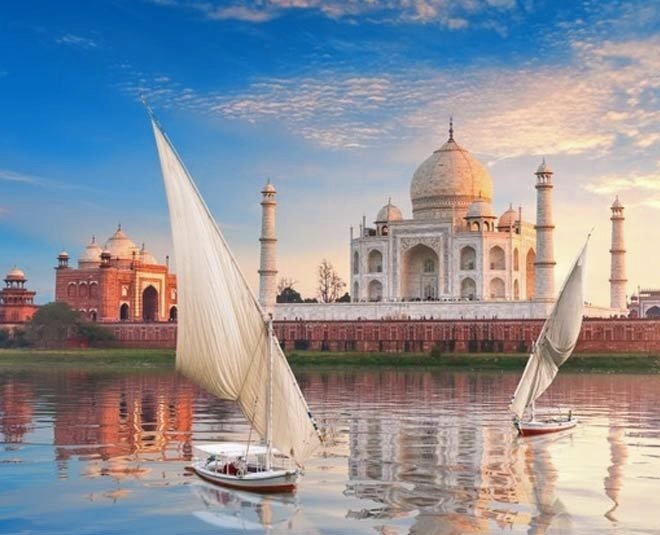
Panoramic view of Taj Mahal at sunset with reflection, Agra, India

For more information message me directly:https://t.me/ra14j

The Taj Mahal, chosen as one of the ‘Seven Wonders of the New World,’ is the fruit of a legendary love story. Countless people from all over the world visit this unique work built by Muslim Turks in India, but most are unaware of its history

states such as India, Pakistan, Bangladesh, Myanmar and Nepal, are Muslims. Here, Islam is the second largest religion relative to the population and it has played an almost essential role in Indian culture. Today, most of the historical artifacts popular with tourists in India were built by Muslim Turks.

Seven Wonders of the New World
India came in contact with Islam through Muslim Arab traders in the seventh century. But it was the Turks who really brought Islam to India. In the 11th century, the Ghaznavids dominated northern India. These lands were ruled by Muslim Turkish states.

In the 16th century, making a risky attempt, Babur, the grandson of the Turco-Mongol conqueror Timur, marched from Kabul to India, which his grandfather formerly occupied. He settled here with a small force and built an enormous empire that gifted humanity with unique artifacts. Babur Shah is one of the great figures of world history. He was the founder of a state and one of those rare rulers who wrote their memoirs. Babur’s memoirs, called Baburname, were written in a very sincere language without concealing anything.

The Mughal rulers demonstrated a trait that is not known to everyone and, in fact, unexpected given their strong military identities. This feature is their incomparable devotion to their wives. The Taj Mahal, which was selected as one of the Seven Wonders of the World in 2007 and included in the UNESCO world cultural heritage list, is the fruit of such a romantic love. It is not clear why a novel has not been written or a movie has not been made.

People are divided into two…
English Lord Edward Lear said, “People are divided into two: those who have seen the Taj Mahal and those who have not.” The Taj Mahal is a mausoleum built by the Mughal Emperor Shah Jahan, also known as Hurram Shah Jahan, for his beloved wife Mumtaz Mahal, or Arjumand Banu-Begum Mumtaz Mahal, in the city of Agra. It is the biggest and most beautiful monument erected in the name of love in the world.

Mumtaz Mahal’s father, Asaf Khan, was a vizier from the Qaraqoyunlu Turkmen who ruled in Iran and Iraq. He came to India from Iran; he abandoned Shiism and became a Sunni.

Once upon a time, the nobles used to sell their handicrafts at a charity sale called Mina Bazaar and do good deeds with the money. Shah Jahan, who was a prince at that time, met his maternal relative, 20-year-old Mumtaz Mahal, here. He was fascinated by her beauty and intelligence. One of the greatest loves in history was born here.

Their marriage lasted 20 years. During this time, the shah did not look at any other woman. They had 14 children. Seven survived. Mumtaz Mahal died in 1631 while giving birth to her last child. Women who die while giving birth are revered in Indian culture.

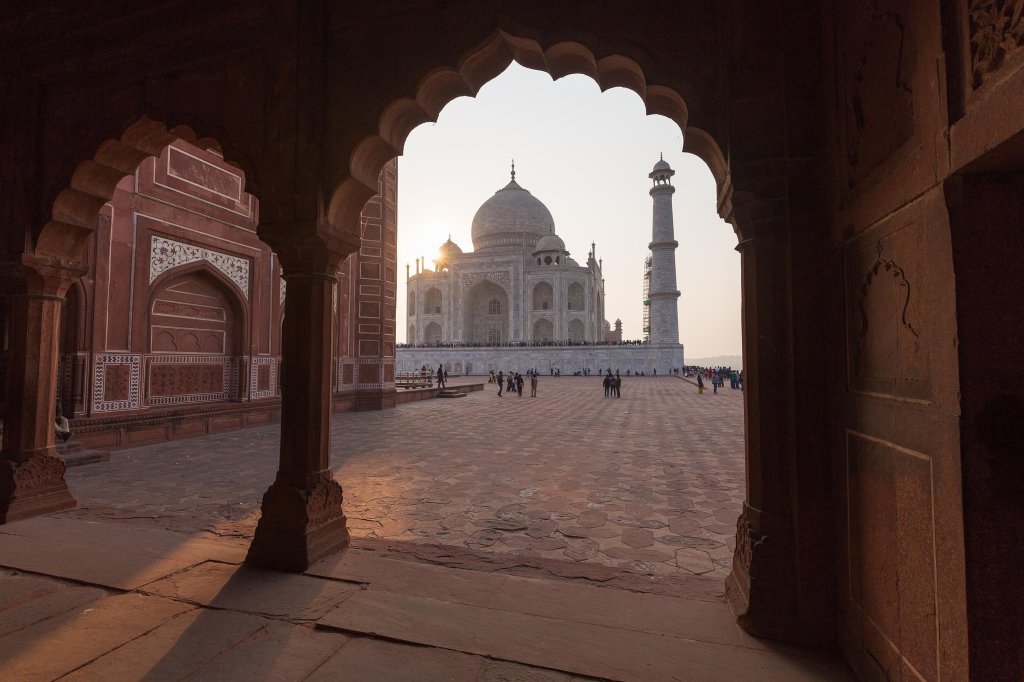
The view of Taj Mahal, Agra, India. 

Ottoman hand in Taj Mahal
This incident was enough to devastate Shah Jahan. The shah lost his sight. He asked an architect from Istanbul to build a mausoleum on the banks of the Yamuna River for his beloved wife. Isa Efendi, the student of the famous Ottoman architect Sinan and the architect of the Sultanahmet Mosque, was sent. Its foundation was laid in 1632 and it was completed in 22 years with 20 thousand workers working every day.

The transparent marble interior walls from Rajasthan are decorated with rubies, sapphires, diamonds, emeralds, agate, turquoise, mother-of-pearl and pearls. Surah Yasin was inscribed on the interior and exterior of the tomb by engraving black marble into the white marble. Four outward-slanting minarets were added to the corners so that they would not damage the building if it was hit by an earthquake.

Being a single piece of marble, the entrance door of the tomb is 33 meters (108 feet) tall, an elegant mosque on the left, a symmetrical mihmanhane ( guesthouse) on the right; the garden adorned with pools and the magnificent red stone exterior door fascinate people.

Although a greedy British governor put this magnificent building up for sale during the colonial period, it could not find a buyer due to the stock market crisis.

The color of mourning
Shah Jahan wanted to have a similar one constructed in black, the color of mourning, built next to the Taj Mahal for himself. In order to prevent this as it would incur a great expense for the treasury, his son Alamgir Aurangzeb deposed him and forced him to reside in the Agra Fortress. Shah Jahan, already embittered, did not object to this.

He spent his life watching the Taj Mahal without meeting anyone in the room, which was called the Müsemmen Burc (Octagonal Tower) because of its octagonal shape. On his deathbed, he had a mirror placed in front of him and continued to watch the Taj Mahal. When he died, he was buried next to his wife.

Now two lovers rest in their eternal sleep in a room where every sound is reflected seven times. Countless visitors from the seven corners of the realm also commemorate the two heroes of this distinguished love. The whole world bows in admiration before this magnificent work, which was built with knowledge, emotion, labor and wisdom four centuries ago.

Woman in red saree/sari in the Taj Mahal, Agra, Uttar Pradesh, India

Oh, those Baburid men…
Babur Shah also had a strange love story. He fell in love with his wife’s sister. The religion of Islam allows a man to marry up to four women, provided that he acts fairly. But it forbids him from marrying two sisters at the same time. For this reason, Babur separated from his wife and married his sister-in-law. He was very saddened when his wife, Masuma Begum, whom he had taken a great risk to marry, died while giving birth to a child.

Hamida Begum, the wife of Babur’s son Humayun Shah, whom she loved with such passion, had a magnificent tomb built in Delhi for her husband.

The devotion of his son Akbar Shah to his wife, on the other hand, is not very heartwarming. Akbar Shah married the daughter of his ally Rajput. Then he fell under the influence of a Hindu girl to such an extent that he abandoned his religion to found another. The Muslims, who had been tortured for 40 years, breathed a sigh of relief after his death.

Disappointment
However, their son, Selim Jahangir, whom they had pin their hopes on, dissapointed them. He married Nur-Jahan Begum, the Shiite daughter of a vizier of Iranian origin. The woman fascinated Jahangir with her exceptional beauty, intelligence and grace. She forced her husband to put pressure on the Sunnis. She provoked her husband against the famous mystic Sheikh Ahmed Sihrindi, known as Imam Rabbani. The weak-willed Jahangir imprisoned this great scholar for three years.

His son Hurram Shah Jahan rebelled against his father. Although he had many soldiers and most of his father’s commanders were devoted to him, he could not win. He came to Sheikh Ahmed for his pray and support. The sheikh advised him: “Go to your father, kiss his hand, win his heart! He will soon pass away; the reign will remain with you.”

Shah Jahan listened to this advice. He ascended the throne shortly after his father died in 1627. Everyone breathed a sigh of relief. The genius Shah founded cities and had great works built. However, there is one that is one of the most known and visited places in the world today: The Taj Mahal. Shah Jahan’s legendary love story is the most famous of all.

Posted by Technical Mechzone
nature , atmosphere, universal, global warming, Technical knowledge

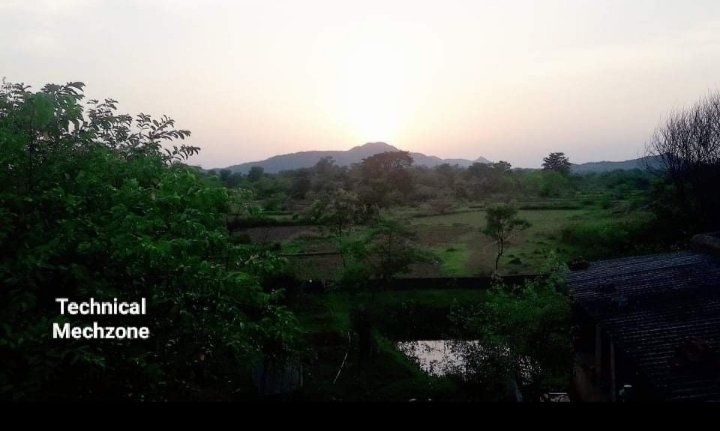
Nature is an important and integral part of mankind

It is one of the greatest blessings for human life; however, nowadays humans fail to recognize it as one. Nature has been an inspiration for numerous poets, writers, artists and more of yesteryears.

This remarkable creation inspired them to write poems and stories in the glory of it. They truly valued nature which reflects in their works even today. Essentially, nature is everything we are surrounded by like the water we drink, the air we breathe, the sun we soak in, the birds we hear chirping, the moon we gaze at and more. Above all, it is rich and vibrant and consists of both living and non-living things. Therefore, people of the modern age should also learn something from people of yesteryear and start valuing nature before it gets too late.
Significance of Nature
Nature has been in existence long before humans and ever since it has taken care of mankind and nourished it forever. In other words, it offers us a protective layer which guards us against all kinds of damages and harms. Survival of mankind without nature is impossible and humans need to understand that.

If nature has the ability to protect us, it is also powerful enough to destroy the entire mankind. Every form of nature, for instance, the plants, animals, rivers, mountains, moon, and more holds equal significance for us. Absence of one element is enough to cause a catastrophe in the functioning of human life.
We fulfill our healthy lifestyle by eating and drinking healthy, which nature gives us. Similarly, it provides us with water and food that enables us to do so. Rainfall and sunshine, the two most important elements to survive are derived from nature itself.

Further, the air we breathe and the wood we use for various purposes are a gift of nature only. But, with technological advancements, people are not paying attention to nature. The need to conserve and balance the natural assets is rising day by day which requires immediate attention.

Conservation of Nature
In order to conserve nature, we must take drastic steps right away to prevent any further damage. The most important step is to prevent deforestation at all levels. Cutting down of trees has serious consequences in different spheres. It can cause soil erosion easily and also bring a decline in rainfall on a major level.
Polluting ocean water must be strictly prohibited by all industries straightaway as it causes a lot of water shortage. The excessive use of automobiles, AC’s and ovens emit a lot of Chlorofluorocarbons’ which depletes the ozone layer. This, in turn, causes global warming which causes thermal expansion and melting of glaciers. 

Therefore, we should avoid personal use of the vehicle when we can, switch to public transport and carpooling. We must invest in solar energy giving a chance for the natural resources to replenish.

In conclusion, nature has a powerful transformative power which is responsible for the functioning of life on earth. It is essential for mankind to flourish so it is our duty to conserve it for our future generations. We must stop the selfish activities and try our best to preserve the natural resources so life can forever be nourished on earth

Posted by Technical Mechzone
science, Technical knowledge, Technology

NASA releases first audio from Mars, video of Perseverance rover landing

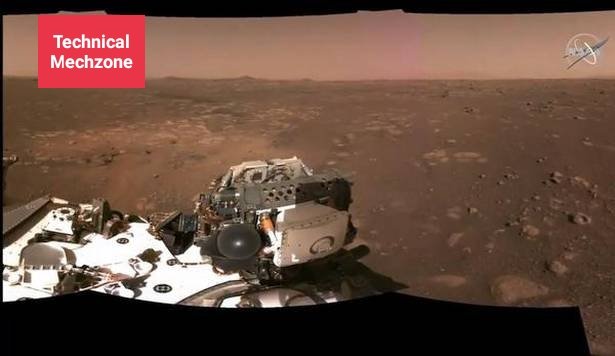
Justin Maki, NASA Perservere imaging scientist and instrument operations team chief, reveals a full panorama the rover captured from the surface of Mars

The video clip showed the deployment of the parachute and the rover’s touchdown on the surface of the Red Planet

The U.S. space agency NASA on Monday released the first audio from Mars, a faint crackling recording of a gust of wind captured by the Perseverance rover

NASA also released the first video of last week’s landing of the rover, which is on a mission to search for signs of past life on the Red Planet.

A microphone did not work during the rover’s descent to the surface, but it was able to capture audio once it landed on Mars.

NASA engineers played a 60-second recording

What you hear there 10 seconds in is an actual wind gust on the surface of Mars picked up by the microphone and sent back to us here on Earth,” said Dave Gruel, lead engineer for the camera and microphone system on Perseverance.

The high-definition video clip, lasting three minutes and 25 seconds, shows the deployment of a red-and-white parachute with a 70.5-foot-wide (21.5-meter-wide) canopy.

It shows the heat shield dropping away after protecting Perseverance during its entry into the Martian atmosphere and the rover’s touchdown in a cloud of dust in the Jezero Crater just north of the Red Planet’s equator.

“This is the first time we’ve ever been able to capture an event like the landing on Mars,” said Michael Watkins, director of NASA’s Jet Propulsion Laboratory, which is managing the mission.

“These are really amazing videos,” Mr. Watkins said. “We binge-watched them all weekend.”

Thomas Zurbuchen, NASA’s associate administrator for science, said the video of Perseverance’s descent is “the closest you can get to landing on Mars without putting on a pressure suit.”

Perseverance is healthy’
Jessica Samuels, Perseverance’s surface mission manager, said the rover was operating as expected so far and engineers were conducting an intensive check of its systems and instruments.


“I am happy to report that Perseverance is healthy and is continuing with activities as we have been planning them,” Ms. Samuels said.

She said the team was preparing for a flight by the rover’s small helicopter drone dubbed Ingenuity.

“The team is still evaluating,” she said. “We have not locked in a site yet.”

Ingenuity will attempt the first powered flight on another planet and will have to achieve lift in an atmosphere that is just one percent the density of Earth’s.


Perseverance was launched on July 30, 2020 and landed on the surface of Mars on Thursday.

Its prime mission will last just over two years but it is likely to remain operational well beyond that. Its predecessor Curiosity is still functioning eight years after landing on Mars.

Over the coming years, Perseverance will attempt to collect 30 rock and soil samples in sealed tubes to be sent back to Earth sometime in the 2030s for lab analysis.


About the size of an SUV, the craft weighs a ton, is equipped with a seven-foot-long robotic arm, has 19 cameras, two microphones and a suite of cutting-edge instruments.

Mars was warmer and wetter in its distant past, and while previous exploration has determined the planet was habitable, Perseverance is tasked with determining whether it was actually inhabited.

It will begin drilling its first samples in summer, and along the way it will deploy new instruments to scan for organic matter, map chemical composition and zap rocks with a laser to study the vapor.


One experiment involves an instrument that can convert oxygen from Mars’ primarily carbon dioxide atmosphere, much like a plant.

The idea is that humans eventually won’t need to carry their own oxygen on hypothetical future trips, which is crucial for rocket fuel as well as for breathing.


The rover is only the fifth to set its wheels down on Mars. The feat was first accomplished in 1997, and all of them have been American.


The United States is preparing for an eventual human mission to the planet, though planning remains very preliminary.

Posted by Technical Mechzone

science, Technical knowledge, Uncategorized

Dwarp Pluto planet

प्लूटो एक बौना ग्रह है जिसकी खोज 1930 में क्लाइड टॉमबो नाम के वैज्ञानिक ने की थी। यह बौना ग्रह भी अन्य ग्रहों की तरह ही सूर्य की परिक्रमा करता है। लेकिन यह आकार में बहुत छोटा है। इसकी खोज आज ही के दिन यानी 18 फरवरी को हुई थी।

nature, earth, environment, science, Technical knowledge, Technology

There is a way to go to the black hole, but it is not possible to come back ‘!!!!!!!!!!!!!!

Two physicists have figured out the conditions necessary to enter the black hole. Black holes are so mysterious that scientists are very keen to know about them. Scientists say that going to a black hole would be a one-way trip, because if the light could also come out from the black hole, then it is useless to predict the possibility of a human coming out. Small black holes do not rotate and the radius of their event horizon is very low. This is the place, after which nothing comes back.

An event horizon means that the event horizon is a boundary beyond which the events beyond it cannot have any effect on the universe outside its boundary, nor can any person sitting outside its boundary know what is beyond the boundary. Used to be.

Here the effect of gravity is very high. Apart from this, the radius of the event horizon of the second massive black hole is 7.3 lakh miles. There is a difference of thousands of billion times in gravity between the center of both and the event horizon. If a star-related object crosses the black hole’s event horizon, it undergoes a process of sphagatification.
Sphagetification is the process by which (in some theories) an object falling into a black hole will be separated or ripped off by gravitational forces. In this, every molecule of its body is pulled by a long strand. This happens because the gravity at one point in space time is much higher than the other point. When this happens, it is impossible to survive in a black hole.

However, if a person falls into a massive black hole, he will be in freefall and there will not be spaghettification. The reason behind this is that the distance between the black hole from the event horizon is much more.

Posted by Technical Mechzone

science

Dark matter not ‘super heavy’ or ‘super light’: In a first, scientists calculate its mass range

(Quantum gravity, a combination of Einstein’s concepts of quantum physics and general relativity, was used in the research)

Around 95 percent of the Universe is unknown to human beings. It is often referred to as dark which has nothing to do with the colour of any substance but to do with the unknown nature of cosmic entities known as dark matter and dark energy.

Now, scientists from the University of Sussex have found a new way to know more about dark matter. They have narrowed down the range of masses within which particles that could make up dark matter may lie in. The range they have established — 10^-3 electron-volts to 10^7 electron-volts — is far smaller than the earlier known range of 10^-24 electron-volt to 10^19 giga electron-volt.

Xavier Calmet and his colleague Folkert Kuipers carried out the research using quantum gravity, a field of study that tries to combine two of Einstein’s concepts — quantum physics and general relativity theory of gravity. “This is the first time anyone has thought of using what we know about quantum gravity to calculate the mass range for dark matter.

We were surprised when we realised no one had done it before, as were the fellow scientists reviewing our paper,” Calmet told Science Alert. Calmet and Kuipers’ research shows that the dark matter particles can neither be super light nor super heavy unless there is a force acting on it that is yet unknown.

The research might also help in finding out more about this mysterious force. There are currently four known forces in the Universe — gravitational, electromagnetic, weak and strong. Scientists estimate that roughly 68 per cent of the Universe is made up of dark energy which is responsible for the accelerated expansion of the Universe.

Another 27 per cent is dark matter whose existence was inferred from the observation that ordinary matter in galaxies, including the Milky Way, is far less than that required by gravity to hold the galaxies together. Dark matter’s gravitational effects are also necessary to explain the motions of clusters of galaxies and the structure of the entire Universe at the largest scale.

On smaller scales, dark matter is too diffused to impact the motion of the Solar System, Earth or the origin and evolution of humans in any significant way. “The inhomogeneities at early times would have been smoothened out by radiations if there was only ordinary matter. There needs to be a form of matter that does not couple to the radiation in order for galaxies like the Milky Way to form,” says Abraham Loeb, chair of the department of astronomy at Harvard University and the founding director of Harvard’s Black Hole Initiative. “Secondly, when we look at galaxies, we infer that they must contain much more mass than the visible mass of their gas and stars.

This has been known for 70 years since Fritz Zwicky inferred that clusters of galaxies contain much more matter than their visible mass,” But the nature of that dark matter is still unclear. It is most likely made of particles that do not couple to light because of which humans cannot see them, according to Loeb.

He surmised that dark matter is unlikely to be made of primordial black holes because they would produce other effects that are ruled out observationally. The breakthrough in human understanding of dark matter could come from laboratory experiments. There were hopes that new particles will be produced and discovered at the Large Hadron Collider or other experiments but so far we have had no success.

There were also attempts to detect dark matter particles impinging on Earth from the Milky Way galaxy but again these “direct detection” experiments of the past few decades were not successful, While there is no comprehensive theory of quantum gravity, Calmet and Kuipers predicted that it would have a few characteristics of both quantum physics and general relativity. They further said that dark matter particles would have to obey these rules coming out of quantum gravity in the way they break down or interact.

Through this, they established limits on the masses for dark matter particles and ruled out masses that would not be possible as per current human understanding of the two theories. The restriction of mass range eliminates one of the popular candidates for dark matter particles known as Weakly Interacting Massive Particles (WIMP).

If these particles are eventually found out to be the dark matter by other means then it would bring in the influence of the mysterious new force on these WIMPs leading to new physics. Posted by Technical Mechzone