डाउनपेमेंट करने के बाद आपको तीन साल के लिए कुल 1,31,501 रुपये का लोन लेना होगा। इस लोन पर 9.7 फीसदी सालाना की ब्याज दर लागू होगी। आपको तीन साल के दौरान कुल 1,69,776 रुपये का भुगतान करना होगा।
फाइनेंस पर बाइक खरीदना एक बेहतरीन विकल्प माना जाता है। वे लोग जो कि समय पर किस्त चुका देते हैं उनके लिए तो यह काफी बढ़िया विकल्प माना जाता है। अगर आपका बजट कम है और एकमुश्त भुगतान कर बाइक खरीदने में असमर्थ हैं तो इस विकल्प को चुन सकते हैं।
भारतीय यूथ के बीच रॉयल इनफील्ड बुलेट 350 बाइक (Royal Enfield Bullet 350) की काफी डिमांड है। अगर आप इस बाइक को खरीदने की प्लानिंग कर रहे हैं तो 15 हजार रुपये की डाउनपेमेंट के बाद इस बाइक के X Kick Start वेरिएंट को घर ले जा सकते हैं। इस बाइक की कुल कीमत 1,46,501 (ऑन रोड प्राइस, नई दिल्ली) है।
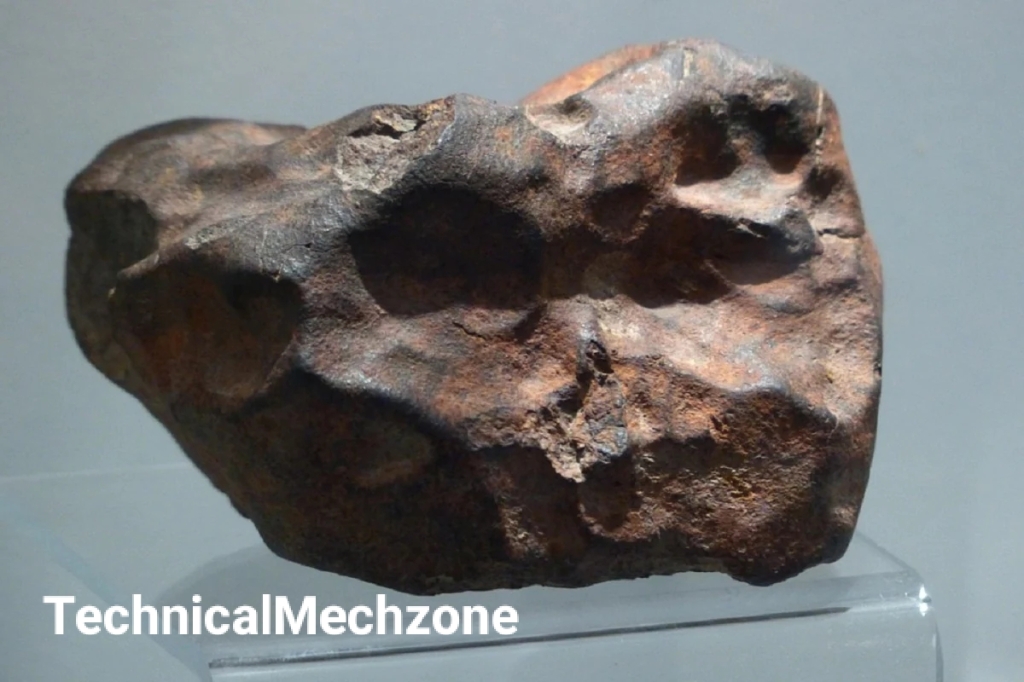
अफ्रीका (Afrcia) के सहारा रेगिस्तान (Sahara Desert) में एक उल्कापिंड (Meteroite) मिला है जो पृथ्वी (Earth) के बनने से पहले बना था. इससे सौरमंडल में ग्रह निर्माण की प्रक्रिया के बारे में पता चल सकता है.उल्कापिंड (Meteorite) के बारे में कहा जाता है कि वह उस समय के होते हैं जब हमारे सौरमंडल (Solar System) में पृथ्वी (Earth) जैसे ग्रहों का निर्माण हो रहा था. लेकिन शोधकर्ताओं ने अफ्रीका के सहारा रेगिस्तान (Sahara Desert) में एक उल्कापिंड की चट्टान का टुकड़ा खोजा है जो पृथ्वी से भी पुराना बताया जा रहा है. यह पत्थर एक ऐसे ग्रह का माना जा रहा जिसका निर्माण शुरू ही हुआ था और तक तक पृथ्वी अपने अस्तित्व में भी नहीं आई थी
क्या खास है इस उल्कापिंड में :इस उल्कापिंड को Erg Chech 002 या EC 002 नाम दिया गया है. शोधकर्ताओं के अनुसार यह एक पुरातन प्रोटोप्लैनेट की पर्पटी के अंदर बना था. प्रोटोप्लैनेट ग्रहों के मूल रचना खंड होते हैं. शोधकर्ताओं का कहना है कि यह अब तक का सबसे पुराना ज्ञात लावा है जो पृथ्वी पर गिरा है. इसका अध्ययन करने से हमारे सौरमंडल के शुरुआती समय में ग्रहों की निर्माण के बारे में जानकारी मिल सकती है.
कहां मिला है यह उल्कापिंड यह पत्थर अफ्रीका के अलजीरिया के अर्ग चेच ड्यून सागर में मिला था और उसकी आधार पर उसे नाम दिया गया है. वास्तव में यह बहुत सारे उल्कापिंडों से बना है और उसका वजन 70 पाउंड यानि करीब 32 किलो का है. शोधकर्ताओं ने इसका विश्लेषण कर पाया है कि पर्पटी का यह टुकड़ा लावा की तरह पिघला हुआ था और उसके बाद क्रिस्टलीकरण होकर वह ठोस बन गया.
कितना पुराना इस पत्थर के मैग्नीशियम और एल्यूमीनियम आइसोटोप्स के अध्ययन से पता चला है कि यह 4.566 अरब साल पुराना है जो अभी तक पाया गया सबसे पुराना आग्नेय शैल है. इससे पहले आग्नेय शैल वाला उल्कापिंड NWA11119 था जो EC002से 12.4 लाख साल छोटा है. पृथ्वी ईन पत्थरों से कई लाख सालों के बाद अस्तित्व में आई थी.
किससे बना है यह उल्कापिंड यह उल्कापिंड में 58 प्रतिशत सिलिकॉन डाइऑक्साइड है जिससे पता चलता है कि पुराने पिंड के एंडेसाइट चट्टान की पर्पटी से बनी है. यह पृथ्वी के ज्वालामुखी इलाकों में पाई जाने वाली बेसाल्ट चट्टान से काफी अलग है. यह पभी पता चला है कि ऐसी पर्पटी हमारे सौरमंडल के शुरुआती समय में क्षुद्रग्रह और प्रोटोप्लैनेट में पाई जाती थी और आज यह बहुत ही कम पाई जाती है.
Join my telegram:@Technicalmechzone
बहुत ही ज्यादा अलग
प्रोसिडिसिंग्स ऑफ द नेशनल एकेडमी ऑफ साइंसेस में प्रकाशित इस अध्ययन की प्रमुख लेखिका और फ्रांस की वेस्टर्न ब्रिटैनी यूनिवर्सिटी में जियोकैमिस्ट्री की प्रोफेसरजीन एलिक्स बैरेट कहती हैं कि EC 002 दूसरे क्षुद्रग्रह समूहों से स्पष्ट तौर पर अलग है. किसी भी पिंड की स्पैक्ट्रल विशेषताएं इससे अभी तक कहीं भी मेल नहीं खाती नहीं दिखी हैं.
कम क्यों दिखते हैं ऐसे पिंड बैरेट का दावा है कि पुरातन पर्पटी के अवशेष उल्कापिंड केरिकॉर्ड में न केवल बहुत ही कम पाए गए हैं, बल्कि ये आज के क्षुद्रग्रह की पट्टी में भी बहुत ही कम हैं. इससे यह संकेत मिलता है कि सौरमंडल के शुरुआती प्रोटोप्लैनेट और उनकी ज्यादातर टुकड़े या तो निश्चित तौर पर खत्म हो गए था. या फिर बढ़ते पथरीले ग्रहों से जुड़ते गए थे. यही वजह रही होगी पुरातन पर्पटी से निकलने वाले इस तरह के उल्कापिंड अपवाद की तरह दिख रहे हैं.माना जा रहा है कि EC 002 अपने मूल प्रोटोप्लैनेट की पर्पटी के ठंडे होने और क्रिटलीकरण होने के दशकों बाद निकला होगा जिससे वह उस समय के ग्रहों के क्रोड़ के विकास की जानकारी दे रहा है जब हमारी पृथ्वी अस्तित्व में ही नहीं थी.
It’s a bullish start to the day. The majors will need to revisit early morning highs, however, to avoid another day in the red.
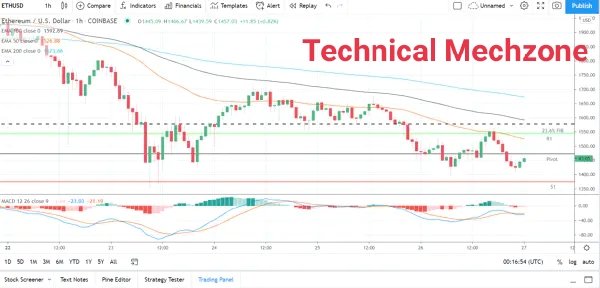
Ethereum Ethereum fell by 2.49% on Friday. Following on from an 8.78% slide on Thursday, Ethereum ended the day at $1,445.18. A mixed start to the day saw Ethereum rise to an early morning high $1,530.00 before hitting reverse.
Falling well short of the major resistance levels and 23.6% FIB of $1,579, Ethereum fell to a mid-morning intraday low $1,400.01.
Finding support at the first major support level at $1,403, Ethereum struck a late afternoon intraday high $1,564.11.
Falling short of the 23.6% FIB and the first major resistance level at $1,617, Ethereum slid back to $1,411 levels before steadying.
At the time of writing, Ethereum was up by 0.82% to $1,457.03. A mixed start to the day saw Ethereum fall to an early morning low $1,439.59 before rising to a high $1,466.67
Ethereum left the major support and resistance levels untested early on.
For the day ahead Ethereum would need to move through the pivot level at $1,470 to support a run at the first major resistance level at $1,540.
Support from the broader market would be needed, however, for Ethereum to break back through to $1,500 levels.
Barring an extended crypto rally, the first major resistance level and 23.6% FIB of $1,579 would likely cap any upside.
In the event of a breakout, Ethereum could test resistance at $1,700 before any pullback. The second major resistance level sits at $1,634.
Failure to move through the $1,470 pivot would bring the first major support level at $1,375 into play.
Barring another extended sell-off, however, Ethereum should steer clear of the 38.2% FIB of $1,292. The second major support level at $1,306 should limit the downside.
Looking at the Technical Indicators First Major Support Level: $1,375
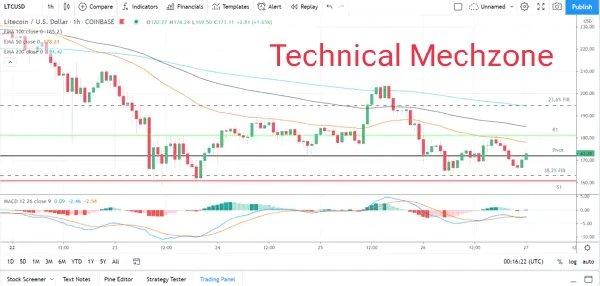
Litecoin Litecoin slid by 5.07% on Friday. Following on from a 1.17% decline on Thursday, Litecoin ended the day at $170.30.
It was a mixed start to the day. Litecoin rose to an early morning intraday high $182.90 before hitting reverse.
Falling short of the 23.6% FIB of $195 and the first major resistance level at $198.04 Litecoin fell to a late morning intraday low $162.23.
The sell-off saw Litecoin fall through the first major support level at $168.05 and the 38.2% FIB of $163.
Finding late morning support, Litecoin revisited $181 levels before falling back to end the day at $170 levels.
At the time of writing, Litecoin was up by 1.65% to $173.11. A mixed start to the day saw Litecoin fall to an early morning low $169.50 before rising to a high $174.24.
Litecoin left the major support and resistance levels untested early on.
For the day ahead Litecoin would need to avoid a fall through the $171.81 pivot level to support a run at the first major resistance level at $181.39.
Support from the broader market would be needed, however, for Litecoin to break back through to $180 levels.
Barring an extended crypto rally, the first major resistance level and Friday’s high $182.90 would likely cap any upside.
In the event of an extended breakout, Litecoin could test the second major resistance level at $192.48 and 23.6% FIB of $195.
Failure to avoid a fall through the $171.81 pivot level would bring the 38.2% FIB of $163 and the first major support level at $160.72 into play.
Barring another extended sell-off, Litecoin should steer clear of the second major support level at $151.14.
Looking at the Technical Indicators First Major Support Level: $160.72
Pivot Level: $171.81
First Major Resistance Level: $181.39
23.6% FIB Retracement Level: $195
38.2% FIB Retracement Level: $163
62% FIB Retracement Level: $110
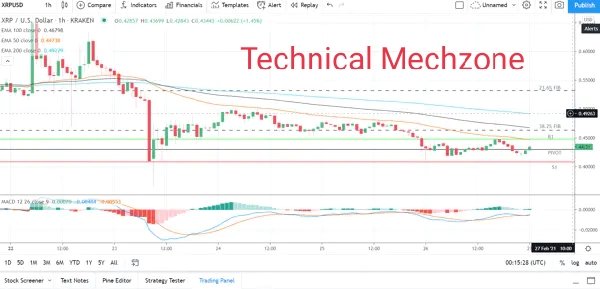
Ripple’s XRP Ripple’s XRP fell by 1.54% on Friday. Following on from a 6.93% slide on Thursday, Ripple’s XRP ended the day at $0.42821.
A bearish start to the day saw Ripple’s XRP slide to an early morning intraday low $0.41137.
Finding support at the first major support level at $0.4133, Ripple’s XRP rose to a late afternoon intraday high $0.45030.
Falling well short of the first major resistance level at $0.4700, however, Ripple’s XRP fell back to sub-$0.42 levels before finding support.
A late move back through to $0.42 levels reduced the deficit on the day.
At the time of writing, Ripple’s XRP was up by 1.45% to $0.43443. A mixed start to the day saw Ripple’s XRP fall to an early morning low $0.42843 before rising to a high $0.43699.
Ripple’s XRP left the major support and resistance levels untested early on.
For the day ahead Ripple’s XRP will need to avoid a fall back through the $0.4300 pivot level to bring the first major resistance level at $0.4486 into play.
Support from the broader market would be needed, however, for Ripple’s XRP to break out from $0.4500 levels.
Barring an extended crypto rally, the first major resistance level and Friday’s high $0.4503 should cap any upside.
In the event of an extended rally, Ripple’s XRP could test resistance at the 38.2% FIB of $0.4632 and the second major resistance level at $0.4689.
Failure to avoid a fall through the $0.4300 pivot would bring the first major support level at $0.4096 into play.
Barring another extended sell-off, however, Ripple’s XRP should steer clear of sub-$0.40 levels. The second major support level sits at $0.3910.
Looking at the Technical Indicators First Major Support Level: $0.4096
The first image sent by NASA’s Perseverance rover upon touching down on Mars shows its shadow upon the Red Planet’s surface, at the Jezero crater.
The rover will begin its search for traces of ancient microbial life on Mars
NASA’s science rover Perseverance, the most advanced astrobiology laboratory ever sent to another world, streaked through the Martian atmosphere on Thursday and landed safely on the floor of a vast crater, its first stop on a search for traces of ancient microbial life on the Red Planet.
Mission managers at NASA’s Jet Propulsion Laboratory near Los Angeles burst into applause and cheers as radio signals confirmed that the six-wheeled rover had survived its perilous descent and arrived within its target zone inside Jezero Crater, site of a long-vanished Martian lake bed.
The robotic vehicle sailed through space for nearly seven months, covering 293 million miles (472 million km) before piercing the Martian atmosphere at 12,000 miles per hour (19,000 km per hour) to begin its approach to touchdown on the planet’s surface.
The spacecraft’s self-guided descent and landing during a complex series of maneuvers that NASA dubbed “the seven minutes of terror” stands as the most elaborate and challenging feat in the annals of robotic spaceflight.
“It really is the beginning of a new era,” NASA’s associate administrator for science, Thomas Zurbuchen, said earlier in the day during NASA’s webcast of the event.
The landing represented the riskiest part of two-year, $2.7 billion endeavor whose primary aim is to search for possible fossilized signs of microbes that may have flourished on Mars some 3 billion years ago, when the fourth planet from the sun was warmer, wetter and potentially hospitable to life.
Scientists hope to find biosignatures embedded in samples of ancient sediments that Perseverance is designed to extract from Martian rock for future analysis back on Earth – the first such specimens ever collected by humankind from another planet.
Two subsequent Mars missions are planned to retrieve the samples and return them to NASA in the next decade.
Thursday’s landing came as a triumph for a pandemic-weary United States in the grips of economic dislocation caused by the COVID-19 public health crisis.
Search for ancient life NASA scientists have described Perseverance as the most ambitious of nearly 20 U.S. missions to Mars dating back to the Mariner spacecraft’s 1965 fly-by.
Larger and packed with more instruments than the four Mars rovers preceding it, Perseverance is set to build on previous findings that liquid water once flowed on the Martian surface and that carbon and other minerals altered by water and considered precurors to the evolution of life were present.
Perseverance’s payload also includes demonstration projects that could help pave the way for eventual human exploration of Mars, including a device to convert the carbon dioxide in the Martian atmosphere into pure oxygen.
The box-shaped tool, the first built to extract a natural resource of direct use to humans from an extraterrestrial environment, could prove invaluable for future human life support on Mars and for producing rocket propellant to fly astronauts home.
Another experimental prototype carried by Perseverance is a miniature helicopter designed to test the first powered, controlled flight of an aircraft on another planet. If successful, the 4-pound (1.8-kg) helicopter could lead to low-altitude aerial surveillance of distant worlds, officials said.
The daredevil nature of the rover’s descent to the Martian surface, at a site that NASA described as both tantalizing to scientists and especially hazardous for landing, was a momentous achievement in itself.
The multi-stage spacecraft carrying the rover soared into the top of Martian atmosphere at nearly 16 times the speed of sound on Earth, angled to produce aerodynamic lift while jet thrusters adjusted its trajectory.
A jarring, supersonic parachute inflation further slowed the descent, giving way to deployment of a rocket-powered “sky crane” vehicle that flew to a safe landing spot, lowered the rover on tethers, then flew off to crash a safe distance away.
Perseverance’s immediate predecessor, the rover Curiosity, landed in 2012 and remains in operation, as does the stationary lander InSight, which arrived in 2018 to study the deep interior of Mars.
Last week, separate probes launched by the United Arab Emirates and China reached Martian orbit. NASA has three Mars satellites still in orbit, along with two from the European Space Agency.
प्लूटो एक बौना ग्रह है जिसकी खोज 1930 में क्लाइड टॉमबो नाम के वैज्ञानिक ने की थी। यह बौना ग्रह भी अन्य ग्रहों की तरह ही सूर्य की परिक्रमा करता है। लेकिन यह आकार में बहुत छोटा है। इसकी खोज आज ही के दिन यानी 18 फरवरी को हुई थी।
Two physicists have figured out the conditions necessary to enter the black hole. Black holes are so mysterious that scientists are very keen to know about them. Scientists say that going to a black hole would be a one-way trip, because if the light could also come out from the black hole, then it is useless to predict the possibility of a human coming out. Small black holes do not rotate and the radius of their event horizon is very low. This is the place, after which nothing comes back.
An event horizon means that the event horizon is a boundary beyond which the events beyond it cannot have any effect on the universe outside its boundary, nor can any person sitting outside its boundary know what is beyond the boundary. Used to be.
Here the effect of gravity is very high. Apart from this, the radius of the event horizon of the second massive black hole is 7.3 lakh miles. There is a difference of thousands of billion times in gravity between the center of both and the event horizon. If a star-related object crosses the black hole’s event horizon, it undergoes a process of sphagatification. Sphagetification is the process by which (in some theories) an object falling into a black hole will be separated or ripped off by gravitational forces. In this, every molecule of its body is pulled by a long strand. This happens because the gravity at one point in space time is much higher than the other point. When this happens, it is impossible to survive in a black hole.
However, if a person falls into a massive black hole, he will be in freefall and there will not be spaghettification. The reason behind this is that the distance between the black hole from the event horizon is much more.







 Technical mechzone