1.September Slump: Historically, September tends to be a difficult month for Bitcoin, with the cryptocurrency often seeing price declines. Bitcoin typically experiences an average drop of 6.56% during September, and this year is following a similar trend. The price has fluctuated between $49,000 and $66,000, but many investors remain cautious as the coin has already dropped by 7.5% last week.
2.Market Sentiment: Despite these declines, some indicators, like the Puell Multiple, suggest that Bitcoin might be approaching a favorable buy zone, offering potential for a price rebound. This indicator is closely watched by investors who believe it could signal a good time to accumulate Bitcoin at lower prices.
3.Federal Reserve’s Impact: A possible interest rate cut by the U.S. Federal Reserve is adding uncertainty to Bitcoin’s future performance. While rate cuts could weaken the U.S. dollar and increase Bitcoin’s appeal as a store of value, analysts predict that Bitcoin could face further volatility, potentially dropping to $55,000 or even $45,000 if macroeconomic conditions worsen.
In the coming weeks, investors will closely watch for any macroeconomic shifts and their impact on Bitcoin’s price. Historically, after a September slump, October tends to offer better returns, with an average increase of 22%.
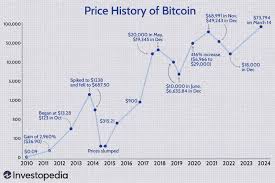
Here is a step-by-step history of **Bitcoin** from its inception in **2009** up to **September 2024
1. 2008 – The Idea – In **October 2008**, a whitepaper titled “Bitcoin: A Peer-to-Peer Electronic Cash System” was published by an unknown person or group using the pseudonym **Satoshi Nakamoto**. – The goal was to create a decentralized digital currency, free from government control, relying on **blockchaintechnology** to secure transactions.
2. 2009 – Bitcoin Launches – In **January 2009**, the **Bitcoinnetwork** was launched. The first block, known as the **GenesisBlock**, was mined by Nakamoto. – Bitcoin had no initial market value; it was mainly traded among cryptography enthusiasts.
3. 2010 – First Real-World Transaction – In **May 2010**, the first known Bitcoin transaction for real-world goods took place when **Laszlo Hanyecz** bought two pizzas for **10,000 BTC**. This day is now celebrated as **Bitcoin Pizza Day**. – By the end of 2010, Bitcoin’s value had risen to **$0.08 per BTC**.
4. 2011 – Reaching Parity with USD – In **2011**, Bitcoin reached parity with the **U.S. dollar** for the first time. It started gaining more attention, especially in tech circles. – Other cryptocurrencies like **Litecoin** and **Ethereum** began emerging as Bitcoin alternatives (altcoins).
5. 2013 – Early Bull Run **2013** saw Bitcoin’s first major price surge. It went from **$13** in January to over **$1,000** by December. The rise was partly due to growing interest from investors and media. – This year also marked the fall of **Mt. Gox**, a large Bitcoin exchange, after it lost 850,000 BTC in a hack.
6. 2017 – Historic Bull Run – Bitcoin reached new heights in **2017**, hitting an all-time high of **$20,000** in December. – Factors driving this were increased retail and institutional interest, Initial Coin Offerings (ICOs), and Bitcoin’s growing mainstream recognition.
7. 2018 – Bear Market After the 2017 bull run, **2018** saw Bitcoin’s price crash, dropping to **$3,200** by December. – This was due to market corrections, regulatory scrutiny, and the bursting of the ICO bubble.
8. 2020-2021 – Institutional Adoption
**2020** was a landmark year with institutional adoption picking up pace. Companies like **MicroStrategy** and **Tesla** started buying Bitcoin as a hedge against inflation.
– Bitcoin’s price soared in **2021**, reaching a new all-time high of **$64,000** in April 2021, driven by the broader economic response to the COVID-19 pandemic and increasing demand.
9. 2022 – Market Downturn – Bitcoin, along with other cryptocurrencies, entered a **bearmarket** in **2022** due to global economic uncertainty, rising inflation, and interest rate hikes by central banks. – Bitcoin’s price dropped to around **$17,000** by the end of 2022.
10. 2023 – Recovery and Halving Anticipation** – Bitcoin began a gradual recovery in **2023**, largely due to anticipation of the upcoming **2024 halving**, an event that halves the reward miners receive for adding new blocks to the Bitcoin blockchain. – By the middle of 2023, Bitcoin’s price had recovered to around **$30,000
11. 2024 – New All-Time Highs – In **March 2024**, Bitcoin hit a new all-time high of **$73,737** as enthusiasm for the 2024 halving event surged. – By **September 2024**, Bitcoin’s price had corrected to around **$56,000**. Analysts predict two scenarios for the rest of the month: either a bullish rally up to **$68,000**, or a potential dip to **$50,000** before a recovery .
Summary Bitcoin has evolved from a niche digital currency to a mainstream financial asset. It has undergone several bull and bear cycles, driven by factors such as technological advancements, regulatory shifts, market sentiment, and macroeconomic trends. With its **2024halving** on the horizon, Bitcoin continues to draw attention from investors and institutions worldwide.






 Technical mechzone