Mostly cement stocks have gained substantially in the last two trading sessions and Ambaja Cement is also trading in tandem with the trend. It surged almost vertically from the support zone of the medium-term moving average (100 EMA) on the daily chart and made a new record high as well. The chart pattern, combined with recent buoyancy in the market, is pointing towards a steady up move ahead. Traders can create fresh longs on any dip in the given range.
MothersonSumi Systems Limited Recommendation: Buy Last Close: 156.30 Initiation range: 156-158 Target: 180 Stop loss: 145
MothersonSumi has retraced marginally and tested the support zone around 140, taking a breather after a strong recovery from the March 2020 lows. It has formed a fresh buying pivot now and looks all set to resume the uptrend. We thus advise creating fresh longs in the mentioned zone.
Zee Entertainment Enterprises Limited Recommendation: Buy Last Close: 242.90 Initiation range: 240-242 Target: 260 Stop loss: 228
We’re seeing a gradual recovery in media stocks and Zee Entertainment is also participating in the move now. It has witnessed a fresh breakout on February 2, after spending nearly one and a half months in a consolidation range. Indications are in the favour of recent momentum to extend further. Traders shouldn’t miss this opportunity and create fresh longs in the given range.
Note: Dear readers
Business Standard has always strived hard to provide up-to-date information and commentary on developments that are of interest to you and have wider political and economic implications for the country and the world. Your encouragement and constant feedback on how to improve our offering have only made our resolve and commitment to these ideals stronger. Even during these difficult times arising out of Covid-19, we continue to remain committed to keeping you informed and updated with credible news, authoritative views and incisive commentary on topical issues of relevance.
• The government’s plan to ban all private cryptocurrencies in India has spooked investors with prices of the world’s oldest cryptocurrency bitcoin trading at a steep discount of up to 20% against a premium of 10% in the last few days.
The government on Friday had listed a bill, which proposes to ban all private cryptocurrencies in India — such as bitcoin, ether, ripple — in the legislative order of business for the Budget Session of 17th Lok Sabha. The Cryptocurrency and Regulation of Official Digital Currency Bill, 2021 also stated that certain exceptions to promote the underlying technology of cryptocurrency and its uses would be allowed.
Due to the fact that a cryptocurrency draft bill leading to its ban has got listed in the items for discussion during this budget session, the entire industry is in panic. We have seen some panic selling as well, which has led to reduced prices of cryptocurrencies. Bitcoin and ether, which used to trade at 10% premium compared with global markets are now trading at 20% discount,” said Sathvik Vishwanath, co-founder and chief executive officer, Unocoin. *According to the expert, cryptocurrencies didn’t see any notable recovery despite the topic not coming up in the budget speech. Bitcoin was trading marginally higher on Tuesday after hitting a high and a low of $34,715.66 and $33,150.73, respectively, over the past 24 hours The government’s plan to ban all private cryptocurrencies in India has spooked investors with prices of the world’s oldest cryptocurrency bitcoin trading at a steep discount of up to 20% against a premium of 10% in the last few days.
The government on Friday had listed a bill, which proposes to ban all private cryptocurrencies in India — such as bitcoin, ether, ripple — in the legislative order of business for the Budget Session of 17th Lok Sabha.
The Cryptocurrency and Regulation of Official Digital Currency Bill, 2021 also stated that certain exceptions to promote the underlying technology of cryptocurrency and its uses would be allowed.
“Due to the fact that a cryptocurrency draft bill leading to its ban has got listed in the items for discussion during this budget session, the entire industry is in panic. We have seen some panic selling as well, which has led to reduced prices of cryptocurrencies. Bitcoin and ether, which used to trade at 10% premium compared with global markets are now trading at 20% discount,” said Sathvik Vishwanath, co-founder and chief executive officer, Unocoin.
According to the expert, cryptocurrencies didn’t see any notable recovery despite the topic not coming up in the budget speech.
Bitcoin was trading marginally higher on Tuesday after hitting a high and a low of $34,715.66 and $33,150.73, respectively, over the past 24 hours. It was trading at $34,265 at 1.45 pm (IST) on Tuesday, as per data available with crypto exchange WazirX.
Last year, the Supreme Court of India had quashed a Reserve Bank of India’s (RBI) ban on crypto-related payments.
Industry experts also are hoping for government support. “The contents of the draft bill remain unknown, which is also adding to the panic of the community. India is known for following the footsteps of developed counties when it comes to technical innovation and it is the time for governments and regulators to look at how this has played out there more closely before making knee-jerk reactions,” said Vishwanath.
RBI earlier had also said that the apex bank is exploring a digital version of the rupee.
“We’re proud that the RBI is exploring a digital rupee built on a blockchain. Blockchain technology not only lowers costs, but it also improves accounting since it is an immutable ledger, which would give the government new tools to fight corruption. However, creating a government currency doesn’t require the banning of non-government crypto assets. On the contrary, safely including all aspects of this new technology will bring tremendous tax revenue and innovation,” said Rahul Pagidipati, chief executive officer at ZebPay.
In other cryptocurrencies, ethereum and tether were trading in the green by up to 8%, while stellar was down 5% in the red on Tuesday.
Crypto firms in India have also experienced a successful year since the lockdowns in March 2020. Trading on crypto exchanges increased manifold, while Bitcoin’s sudden bull run in December brought in more investors as well. The current move poses a threat to the future of this industry
NEW DELHI: The domestic cryptocurrency industry has been urging the Center to reconsider its apparent plan to ban private cryptocurrencies, like Bitcoin, in India. Industry stakeholders said while the government’s intention to create a Central Bank Digital Currency (CBDC) is a welcome move, the definition of what the government considers “private cryptocurrencies” will be important.
The Indian government’s plan to “create a facilitative framework for creation of the official digital currency to be issued by the Reserve Bank of India (RBI),” was announced in the agenda for the upcoming Budget session of Parliament. The legislation seeks “to prohibit all private cryptocurrencies in India”, the agenda said. It is meant to allow the use of blockchain technology, which is the underlying tech behind cryptocurrencies, but many expect that it will make the use of currencies like Bitcoin and Ethereum illegal in the country.
“The digital currency bill to be introduced in the Lok Sabha is a welcome step. Its success will depend on the details, particularly the definition of what the bill calls ‘private cryptocurrencies’. This is not a common term. Bitcoin is not privately owned by anyone. It is a public good, like the internet,” said Rahul Pagdipati, chief executive officer (CEO) of crypto exchange and wallet ZebPay.
Industry executives say the government’s concern is likely about the possible use of cryptocurrency as an alternative to the Indian rupee (INR). They argued that cryptocurrencies instead are similar to assets such as gold. “As an industry, we’re in sync with the fact that INR is the only legal tender in India and about crypto being an asset/utility that people buy and sell,” said Nishcal Shetty, founder of WazirX, India’s largest cryptocurrency exchange, which was acquired by Binance, the largest crypto exchange in the world.
“Bitcoin and most crypto assets are more like gold and not an alternative to government-issued legal tender,” said Pagdipati. “Crypto assets and digital government currency can coexist and together,” he said.
The industry has urged the government to consult stakeholders before coming to a decision. “We urge the government to take the opinion of all the stakeholders before taking a decision that may affect the livelihood of the entire workforce employed in the digital asset industry in India,” said Shivram Thukral, CEO of BuyUcoin, another cryptocurrency exchange and wallet. “We have faith in the government and hope that this bill will move India forwards, not backwards,” said Pagdipati The latest declines are occurring almost a year after cryptocurrency markets, fuelled by a rush of new, wealthy investors, went into overdrive. Crypto firms in India have also experienced a successful year since the lockdowns in March 2020. Trading on crypto exchanges increased manifold, while Bitcoin’s sudden bull run in December brought in more investors as well. The current move poses a threat to the future of this industry
NEW DELHI: The domestic cryptocurrency industry has been urging the Center to reconsider its apparent plan to ban private cryptocurrencies, like Bitcoin, in India. Industry stakeholders said while the government’s intention to create a Central Bank Digital Currency (CBDC) is a welcome move, the definition of what the government considers “private cryptocurrencies” will be important.
The Indian government’s plan to “create a facilitative framework for creation of the official digital currency to be issued by the Reserve Bank of India (RBI),” was announced in the agenda for the upcoming Budget session of Parliament. The legislation seeks “to prohibit all private cryptocurrencies in India”, the agenda said. It is meant to allow the use of blockchain technology, which is the underlying tech behind cryptocurrencies, but many expect that it will make the use of currencies like Bitcoin and Ethereum illegal in the country.
“The digital currency bill to be introduced in the Lok Sabha is a welcome step. Its success will depend on the details, particularly the definition of what the bill calls ‘private cryptocurrencies’. This is not a common term. Bitcoin is not privately owned by anyone. It is a public good, like the internet,” said Rahul Pagdipati, chief executive officer (CEO) of crypto exchange and wallet ZebPay.
Industry executives say the government’s concern is likely about the possible use of cryptocurrency as an alternative to the Indian rupee (INR). They argued that cryptocurrencies instead are similar to assets such as gold. “As an industry, we’re in sync with the fact that INR is the only legal tender in India and about crypto being an asset/utility that people buy and sell,” said Nishcal Shetty, founder of WazirX, India’s largest cryptocurrency exchange, which was acquired by Binance, the largest crypto exchange in the world.
“Bitcoin and most crypto assets are more like gold and not an alternative to government-issued legal tender,” said Pagdipati. “Crypto assets and digital government currency can coexist and together,” he said.
The industry has urged the government to consult stakeholders before coming to a decision. “We urge the government to take the opinion of all the stakeholders before taking a decision that may affect the livelihood of the entire workforce employed in the digital asset industry in India,” said Shivram Thukral, CEO of BuyUcoin, another cryptocurrency exchange and wallet. “We have faith in the government and hope that this bill will move India forwards, not backwards,” said Pagdipati.
India has considered banning cryptocurrencies once earlier. The government had floated a draft bill for “Banning of Cryptocurrency and Regulation of Official Digital Currency Bill” in 2019. That bill proposed a fine or imprisonment of up to 10 years, or both, for mining, holding, selling, trade, issuance, disposal or use of crypto in India. The Reserve Bank of India (RBI) had also issued a circular in 2019 that banned banks and other regulated entities from doing business with crypto companies. This was struck down by the Supreme Court last year.
According to data from analysis firm Venture Intelligence, investments worth $24 million went into crypto firms in 2020, after the Supreme Court’s decision, up from a mere $5 million in the year before. Crypto firms in India have also experienced a successful year since the lockdowns in March 2020. Trading on crypto exchanges increased manifold, while Bitcoin’s sudden bull run in December brought in more investors too. The government’s current move threatens to put the future of this industry in disarray once again.
For those interested in cryptocurrencies, the government of India has listed a bill to be introduced in the Parliament during the Budget session of the 17th Lok Sabha. The bill seeks to ban private cryptocurrencies like Bitcoin, Ripple, Ether, and others in India.
The government is likely to table the Cryptocurrency and Regulation of Official Digital Currency Bill, 2021. It is aimed at creating a ‘facilitative framework’ for an official digital currency in India to be issued by the banking regulator, the Reserve Bank of India (RBI). The government’s bill also seeks to ban the Bitcoin, Ether, Ripple, and other private cryptocurrencies but it may allow certain kinds of uses and promotions of the technology behind them.
According to the RBI booklet on payment systems, the government is sceptical of these currencies and RBI is exploring the creation of a digital version of the Indian national currency.
“In India, the regulators and governments have been sceptical about these currencies and are apprehensive about the associated risks. Nevertheless, RBI is exploring the possibility as to whether there is a need for a digital version of fiat currency and, in case there is, how to operationalise it,” the booklet said while acknowledging how private digital currencies have gained popularity recently. These private cryptocurrencies were banned earlier as well, but the Supreme Court later overturned the previous ban in 2018.
It is to be noted that the government is considering the introduction of a bill to set up a development finance institution (DFI) in India as well. The central government will introduce The National Bank for Financing Infrastructure and Development (NaBFID) Bill, 2021 in the Parliament.
According to media reports, the DFI is going to act as a catalyst and promote infrastructural financing. It will be the principal financial institution and development bank in India to provide a supportive ecosystem for the infrastructure projects in the country across their life-cycle. Posted by Technical Mechzone
The budget session of Parliament is all set to introduce a new bill that bans private cryptocurrencies and provides for an official digital currency to be issued by the Reserve Bank of India.
The Union Budget, which will be presented on February 1, is looking towards the introduction, consideration, and passing of the Cryptocurrency and Regulation of Official Digital Currency Bill. Apart from prohibiting all private cryptocurrencies in India, the bill also seeks to create a facilitative framework for an official digital currency issued by the RBI. However, as per a Lok Sabha bulletin, the bill allows for certain exceptions to promote the underlying technology of cryptocurrency and its uses. In 2018, the Indian central bank had banned crypto transactions after a number of frauds came to the fore following PM Modi’s decision to ban 80% of the nation’s currency. As a result, the Cryptocurrency trade was brought to a halt after the RBI asked all regulated entities, such as banks, to stop any dealings related to private cryptocurrencies as part of that order.However, the table’s turned when a supreme court bench, headed by Justice Rohinton F Nariman, quashed the central bank’s circular on grounds of disproportionality.
According to a report by Bloomberg, the court ruled that RBI had failed to show “at least some semblance of any damage suffered by its regulated entities’’ to back its decision to effectively bar cryptocurrencies in India.” From then Cryptocurrency exchanges began operations yet again.
The rapid surge in the price of Bitcoins accelerated its use by top banks, which had stopped dealing with cryptocurrency exchanges after the RBI’s order. The dealings with the cryptocurrency became a point of global debate. Large Investment houses said that Bitcoins can be seen as an alternative to gold. JPMorgan said that “a crowding out of gold as an ‘alternative’ currency implies big upside for bitcoin over the long term.” Earlier this week, Bridgewater Associates founder Ray Dalio said Bitcoin is “one hell of an invention” and added that he is considering cryptocurrencies as investments for new funds offering clients protection against the debasement of fiat money. To further this cause, payment networks such as Paypal, MasterCard, and Visa also moved to set up systems that accept payments via cryptocurrencies.
Also, this week, the RBI had reiterated that it was exploring the need for a digital version of the fiat currency.
(An RBI booklet on payment systems issued on 25th Jan also showed that the central bank is exploring whether to issue a digital version of the rupee)
In the legislative order of business for the budget session of 17th Lok Sabha that commenced today, the Government has listed a bill providing for the banning of all private cryptocurrencies in India such as bitcoin, ether, ripple and others. The bill also provides for the creation of a legislative framework on an official digital currency.
An RBI booklet on payment systems issued on 25th Jan also showed that the central bank is exploring whether to issue a digital version of the rupee. “Private digital currencies have gained popularity in recent years,” the central bank booklet said. “In India, the regulators and governments have been sceptical about these currencies and are apprehensive about the associated risks.
Nevertheless, RBI is exploring the possibility as to whether there is a need for a digital version of fiat currency and, in case there is, how to operationalize it,” it noted. A previous RBI ban on the use of bank channels for payments associated with cryptocurrency issued in 2018 was overturned by the Supreme Court in March 2020 creating a vacuum in the regulation of cryptocurrency in India. Posted by Technical Mechzone
Led by losses in index heavyweight Reliance Industries, private lenders and select IT stocks, benchmark indices extended their losses to the fourth day on Wednesday. Weak global markets, a mixed set of Q3 earnings and selling by foreign institutional investors (FIIs) dented the domestic market mood in today’s session. Meanwhile, investors chose to book profits ahead of the Union Budget on Monday, February 1. The BSE barometer Sensex plunged 938 points to 47,410 while its NSE counterpart Nifty slipped below the 14,000 mark to end at 13,968, down 271 points.
The broader market trend was mixed with Nifty Midcap 100 and Nifty 500 indices down 1.58 per cent and 1.68 per cent, respectively, while Nifty Smallcap index added 0.15 per cent. The volatility also remained high ahead of the monthly F&O expiry on Thursday, with India VIX rising 4.93 per cent to 24.39 level. Here are the top factors behind the market crash today. Weak global cues
Asian equities slipped on Wednesday as investors looked to the Federal Reserve’s guidance on its monetary policy while futures for US tech shares jumped after strong earnings from Microsoft. European stocks are expected to slip a tad, with EuroStoxx 50 futures down 0.3 per cent and FTSE futures shedding 0.4 per cent. Global stocks are mostly treading water near record highs as US corporate earnings roll in. Meanwhile, new coronavirus variants that sparked fresh lockdowns and other restrictions are weighing on the market mood.
Frustration over vaccine distribution is also increasing. In a Facebook post last week, Italian Prime Minister described delays in consignments by Pfizer Inc. and AstraZeneca Plc as “unacceptable” while the UK’s health minister warned that vaccines may be less effective against new variants of the coronavirus. That apart, investors are also seeking more clarity on the timeline for President Joe Biden’s $1.9 trillion Covid-19 relief plan. “Delay in US paycheques and overall correction in global markets are driving indices lower. Liquidity is a critical factor right now and any fall in liquidity will lead to a sharp fall in markets,” said Abhimanyu Sofat, Head of Research at IIFL Securities. Budget blues
The Union Budget, set to be unveiled on February 1, is a highly anticipated affair as it comes on the heels of a pandemic that has altered India’s economic landscape. Amid this backdrop, investors have booked profits and are waiting on the sidelines. The government needs to raise resources to help increase spends, but analysts at Bernstein believe equity markets will consider any form of tax increases negative. Those at Credit Suisse, on the other hand, caution against the limited spending room the government has. “While the government appears to be willing to spend now, as it believes the growth multiplier would be higher in an economy without Covid-19 restrictions, Rs 4.2 trillion of extra spending may be difficult to execute. It may choose to be conservative on GDP growth assumptions, and also target a lower deficit, which would imply 13 per cent total expenditure growth. In this scenario, spending on residual heads could be 40% higher than in FY20, but the absolute increase a more reasonable Rs 2.5 trillion,” wrote Neelkanth Mishra, managing director, co-head of Asia Pacific Strategy and India equity strategist at Credit Suisse in a recent report co-authored with Abhay Khaitan and Prateek Singh.
Q3 earnings In the December quarter earnings season, the companies have posted a robust performance but this was mostly pencilled in by the market. However, a performance by Reliance Industries disappointed investors, leading to a massive fall in the company’s shares and subsequently the benchmark indices. Going ahead, analysts are concerned about lower margins. “We are lowering in expectations for forthcoming quarters on margin front as they are expected to peak out in the current quarter,” said Sofat. Valuation concerns The market is overvalued from the perspective of PE multiple and market-cap to GDP ratio. The overvaluation is more than 50 percentage points higher than the historical average. “Profit-booking is normal, particularly when valuations are high, like now,” said Vijay Kumar, adding that such profit-taking is healthy and desirable.
For the third consecutive session on Monday, Nifty50 formed a Long Bear Candle. “The three sessions consecutive decline was formed in the market after the time span of four months. Hence, this pattern could be in-line with the reversal formation in the market at the highs. The last swing high of 14,753 of January 21 could be a reversal high for the near-term,” said Nagaraj Shetti, Technical Research Analyst at HDFC Securities in a note on January 25. Nifty on the weekly chart, formed a Doji and high wave-type candlestick pattern back to back in the last two weeks, Jasani said, adding that this market action could be considered as a beginning of major profit booking in the market from the high.
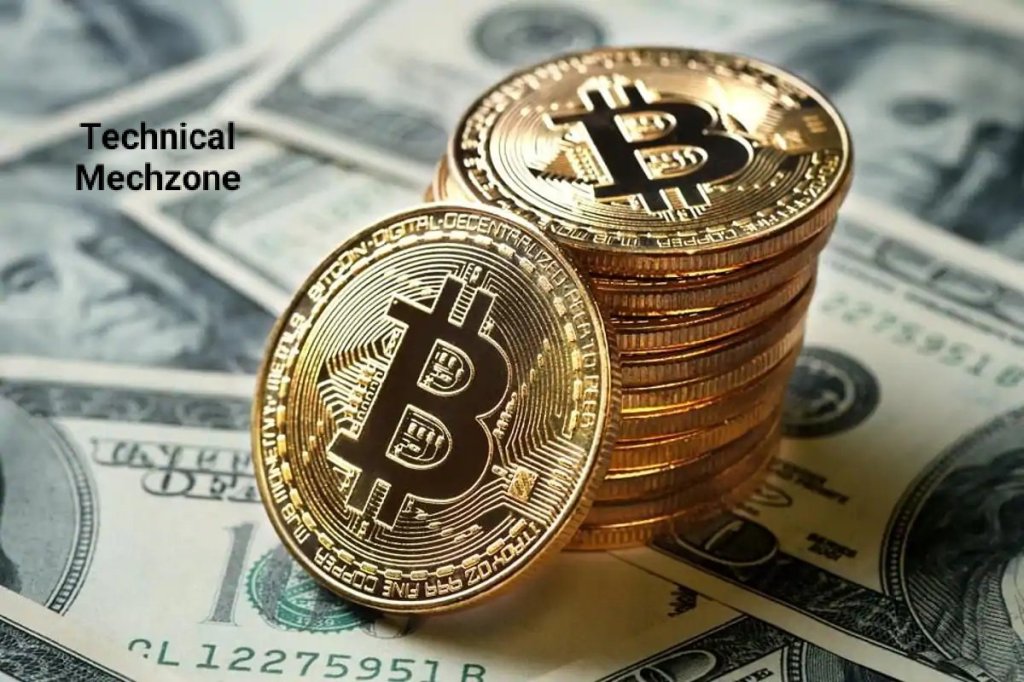
Bitcoin’s price could exceed $50,000 over the longer term as the digital asset vies with gold for investment flows, according to cryptocurrency exchange Luno and brokerage OSL.
We’re talking about Bitcoin over the next three, five, 10 years slowly inching away at gold’s market capitalization,” Vijay Ayyar, head of Asia Pacific with crypto exchange Luno in Singapore, said in an online question and answer session with Bloomberg Tuesday. If that happens, “you are way over $50,000,” he said.
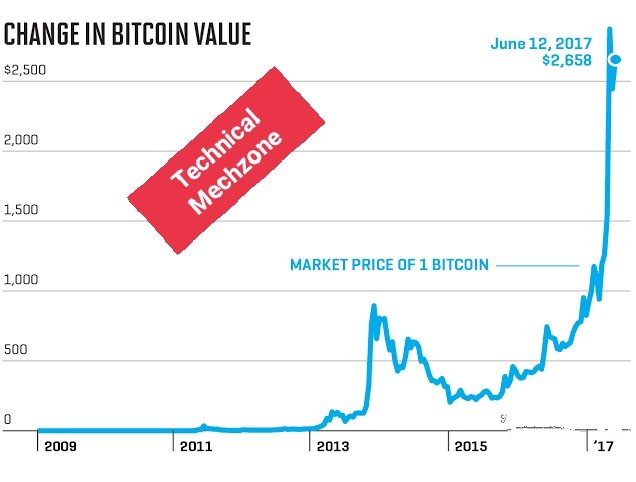
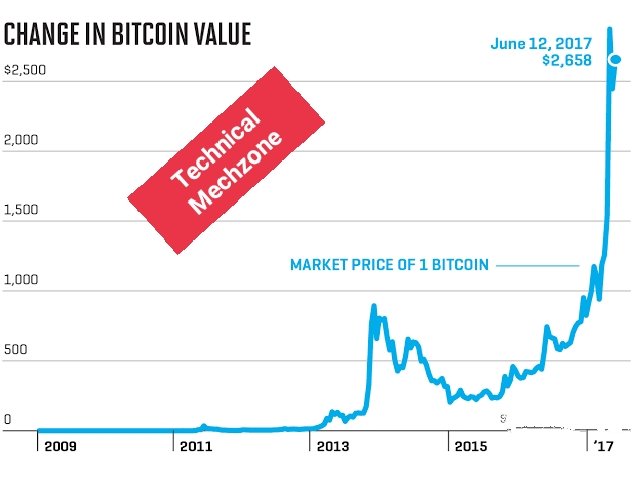
Bitcoin quadrupled last year, eventually reaching an all-time high of almost $42,000 in early January before sliding back by about $10,000. The rally split opinion, with some commentators pointing to increased interest from long-term investors and others citing speculative buying.
While Bitcoin has been popular for trading, “increasingly the new to market money that we are seeing is buying Bitcoin as a hedge to inflation and as digital gold,” said Matt Long, head of distribution and prime brokerage at digital-asset platform OSL in Hong Kong.
Predicting a price for Bitcoin is challenging but it’s likely to rise longer term as funds and family offices assign 0.5% or 1% of their portfolios to it, Long added.
Bitcoin, which has climbed 9% this year, was trading at about $31,500 as of 7 a.m. in London on Tuesday.
By the time Indian companies and individuals get the regulatory certainty they need to start buying bitcoin in larger sums, will the price be so high that they will only be able to afford a fraction of what they could buy today? In 2020, a number of public companies such as Square and MicroStrategy made headlines for buying large amounts of bitcoin to hold as a reserve asset.
No Indian company has done so yet. As bitcoin ownership grows in the US, the European Union, Japan, South Korea and even China, many Indians are watching and wondering when their turn will come. By the time Indian companies and individuals get the regulatory certainty they need to start buying bitcoin in larger sums, will the price be so high that they will only be able to afford a fraction of what they could buy today? And who will Indians buy it from? How much bitcoin do Indians own?
According to current estimates, roughly 5 million Indians own or have owned bitcoin or other crypto assets.
By extrapolating from the volumes on ZebPay and our partners in the Indian crypto industry, we can estimate the maximum amount in Indian wallets. Our best guess is that Indians own less than 1% of the world’s bitcoin.
We can say for sure that Americans own much more than 1% of the global supply. The same is true for the EU, Japan and China. There will soon be long-term haves and have-nots in bitcoin. India has a chance to join the haves, but time may be running out .
The usual argument against crypto is that it could be used for money laundering or other illegal activity.
Blockchain analysis firm Chainalysis, a global leader and adviser to several governments, reported that illicit activity accounts for only 1% of all bitcoin transactions. As the US Department of Treasury has confirmed, the dollar is still by far the criminal’s favourite.
The risk of some illicit activity has to be weighed against the larger risk of being left out of what may well become a blockchain economy in the coming decades. Recently, the World Economic Forum and blockchain company Chainlink published a report on integrating traditional infrastructure with blockchain technology.
By integrating blockchain into the Pradhan Mantri Fasal Bima Yojana, India could provide crop insurance to millions of farmers with lower cost, better coordination, and greater transparency and accountability. This is just one example of the hundreds of crores of economic potential waiting to be unleashed if India can close the bitcoin gap and give its citizens access to blockchain and crypto with healthy regulation that ensures both safety and innovation. Can we have just blockchain without cryptocurrencies? Not really.
Crypto tokens are the units that allow the blockchain to function. By investing in a project’s crypto token, people power (often literally, by paying for the electricity) the innovation that the project is trying to achieve.
Across India today, hundreds of innovators are working on blockchain-based solutions to some of the nation’s most pressing problems. They could lower costs, reduce corruption, increase inclusion and create jobs. Nothing is more essentially Indian than innovation. By closing the bitcoin gap and creating healthy regulation that promotes innovation and protects citizens, India can gain a long-term economic advantage. Posted by Technical Mechzone
Following Bitcoin and Ethereum, the other leading cryptocurrencies based on the market cap are Tether ($24.8 billion), Polkadot ($16.1 billion), XRP ($12.4 billion), Cardano ($11.2 billion), Chainlink ($9.7 billion), Litecoin ($9.3 billion), Bitcoin Cash ($8.2 billion), and Binance Coin ($6.4 billion).
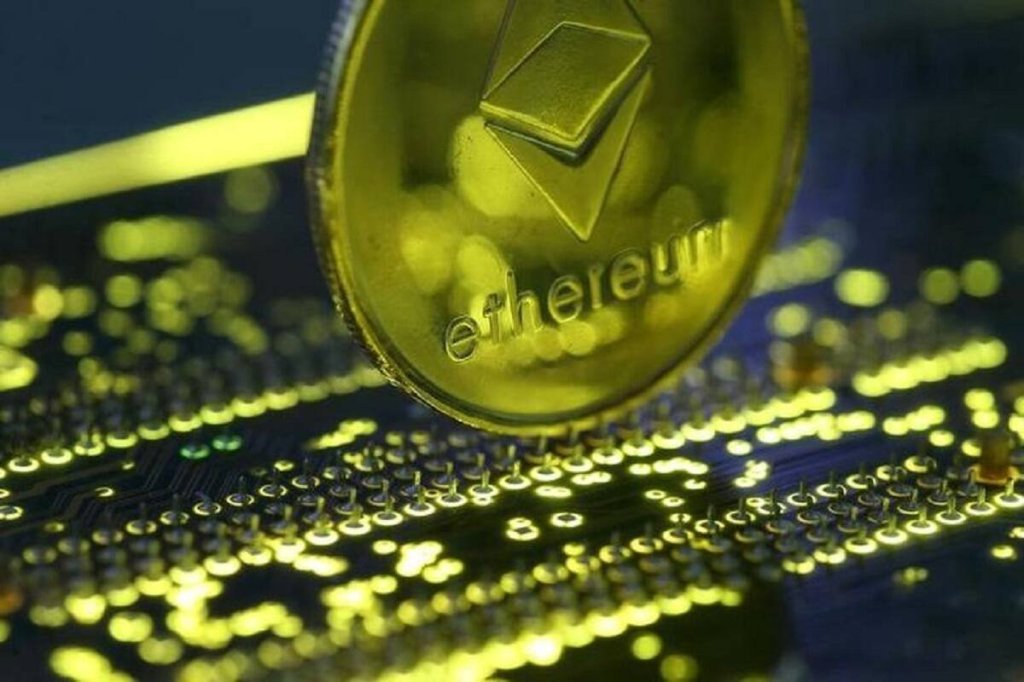
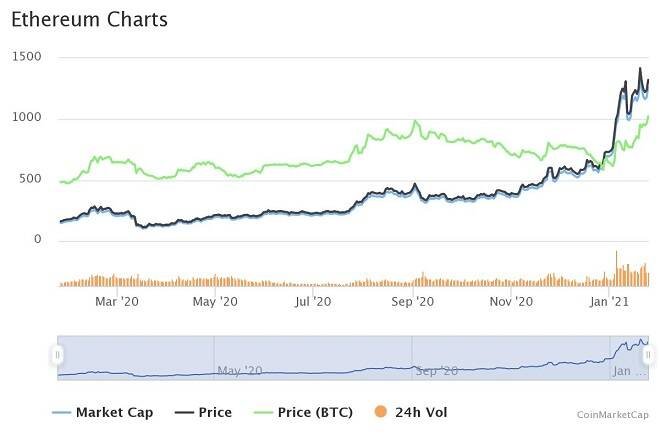
Cryptocurrency king Bitcoin’s closest rival Ethereum has scaled up from $414 price with a market cap of $46.8 billion to $1,323 and $151.4 billion in market cap – a 219 per cent increase in price and 223 per cent jump in valuation in the past three months, according to the data from CoinMarketCap.
Despite being the biggest alternative to Bitcoin, Ethereum doesn’t even come close to bitcoin’s craze and market cap. However, it has managed to create significant buzz around investors. It has drawn the attention of blockchain stakeholders for its use beyond just processing crypto transactions. Ethereum has so far been used for enabling the deployment of smart contracts and decentralized apps to be created and operated without any fraud or interference from third parties, unlike Bitcoin.
The growing popularity, rising valuation, a growing number of exchanges offering Ethereum, and more have been among the reasons for investors flocking to it. Ethereum’s market cap has jumped over 200 per cent in the past three months.
Source: CoinMarketCap In order to buy Ethereum, one can register on one of the crypto exchanges such as BuyUCoin, CoinDCX, Unocoin, and more. Completing KYC and/or anti-money laundering norms are mandatory for Indian jurisdiction. Along with this, the Aadhaar-linked mobile number is also necessary.
One can further secure his/her Ethereum wallet with Google’s 2-step verification following which bank account details have to be added to begin trading Ethereum in India with INR currency. As a user, one can set his/her monthly or weekly, or even daily targets and decide the markets you would want to trade. Be certain of how much risk you are willing to take on every trade and based on it, figure out your risk-reward ratio.
Apart from INR, one can also buy Ethereum with credit and debit cards, UPI, or bank transfers, etc.Following Bitcoin and Ethereum, the other eight leading cryptocurrencies in the top-10 list based on the market cap are Tether ($24.8 billion), Polkadot ($16.1 billion), XRP ($12.4 billion), Cardano ($11.2 billion), Chainlink ($9.7 billion), Litecoin ($9.3 billion), Bitcoin Cash ($8.2 billion), and Binance Coin ($6.4 billion), as per CoinMarketCap. Bitcoin, at the time of filing this report, was trading at $32,305 with a jaw-dropping market cap of $606 billion. Posted by Technical Mechzone











 Technical mechzone