
Bitcoin News and Updates, Cryptocurrency, Digital Assets, Education, Finance and Investment, Personal Finance, Technology

Bitcoin Review: The Revolutionary Digital Currency

Introduction:
Bitcoin, the first decentralized cryptocurrency, has transformed the way we think about money. Launched in 2009 by an anonymous figure known as Satoshi Nakamoto, Bitcoin has grown into a global phenomenon. With its unique features and underlying technology—blockchain—Bitcoin has reshaped the financial landscape and sparked the creation of thousands of other cryptocurrencies. In this post, we’ll dive into a detailed review of Bitcoin and its impact on the world.

What is Bitcoin?
Bitcoin is a digital currency, also known as a cryptocurrency, that operates on a peer-to-peer network. Unlike traditional currencies, Bitcoin isn’t issued or controlled by any government or central bank. Instead, it’s managed through a decentralized network of computers that validate transactions via blockchain technology.

How Does Bitcoin Work?
Bitcoin transactions are secured and verified through cryptography. When someone sends Bitcoin to another user, the transaction is recorded in a public ledger known as the **blockchain**. The blockchain is decentralized, meaning it is not controlled by any one entity, ensuring transparency and security.           Transactions are verified by miners, who use computational power to solve complex mathematical puzzles. In return for their efforts, miners are rewarded with newly minted Bitcoins.

Advantages of Bitcoin:
Decentralization: Bitcoin operates without a central authority, making it immune to government interference.
Security: The use of blockchain and cryptography makes Bitcoin transactions highly secure.
Limited Supply: Bitcoin has a fixed supply of 21 million coins, making it immune to inflation.
Global Transactions: Bitcoin allows for fast and low-cost international transactions without the need for intermediaries like banks.

Challenges of Bitcoin:
**Price Volatility:** Bitcoin’s value can fluctuate dramatically, making it risky for investors.
**Regulatory Uncertainty:** Governments around the world are still figuring out how to regulate cryptocurrencies.
**Scalability Issues:** Bitcoin’s transaction speed and network capacity are limited, causing delays and higher fees during periods of high demand.

Bitcoin’s Impact on the Financial World:
Bitcoin has paved the way for decentralized finance (DeFi) and has inspired the creation of many other cryptocurrencies. It challenges traditional financial systems by offering an alternative to centralized banking. Bitcoin is also being adopted by businesses for payments, and some even consider it a “store of value” akin to gold.

Conclusion:
Bitcoin is a revolutionary financial asset with the potential to disrupt traditional systems. While it offers many benefits, such as decentralization and security, it also faces challenges like volatility and scalability issues. As Bitcoin continues to evolve, its influence on global finance will only grow, with its impact already being felt worldwide.

Bitcoin News and Updates, Blockchain Technology, Cryptocurrency, Digital Assets, Economics

Here’s a step-by-step Bitcoin review for today:


*Step 1: Current Price*
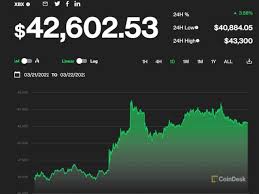
Bitcoin is currently trading at $58,075.65.

*Step 2: Price Change*
The price has increased by 0.98% from yesterday.

*Step 3: Market Capitalization*
Bitcoin’s market capitalization is $1.15 trillion.

*Step 4: 24-hour Trading Volume*
The 24-hour trading volume is $33.72 billion.

*Step 5: Circulating Supply*
The circulating supply of Bitcoin is 19.75 million.

*Step 6: Total Supply*
The total supply of Bitcoin is 19.75 million.

*Step 7: Maximum Supply*
The maximum supply of Bitcoin is 21 million.

*Step 8: Recent News*
– Coinbase launches Coinbase Wrapped Bitcoin (cbBTC), a 1:1 Bitcoin-backed, Ethereum-based token.
– Bitcoin miners dump $1.71 billion in Bitcoin over the past three days, sparking concerns about the recent rally.

Please let me know if you’d like me to expand on any of these points!

Bitcoin News and Updates, Blockchain Technology, Cryptocurrency, Digital Assets, Economics, Finance and Investment, Market Trends

From September 7 to September 8, 2024, Bitcoin has faced significant market volatility, with several key trends emerging

1.September Slump: Historically, September tends to be a difficult month for Bitcoin, with the cryptocurrency often seeing price declines. Bitcoin typically experiences an average drop of 6.56% during September, and this year is following a similar trend. The price has fluctuated between $49,000 and $66,000, but many investors remain cautious as the coin has already dropped by 7.5% last week.

2.Market Sentiment: Despite these declines, some indicators, like the Puell Multiple, suggest that Bitcoin might be approaching a favorable buy zone, offering potential for a price rebound. This indicator is closely watched by investors who believe it could signal a good time to accumulate Bitcoin at lower prices.

3.Federal Reserve’s Impact: A possible interest rate cut by the U.S. Federal Reserve is adding uncertainty to Bitcoin’s future performance. While rate cuts could weaken the U.S. dollar and increase Bitcoin’s appeal as a store of value, analysts predict that Bitcoin could face further volatility, potentially dropping to $55,000 or even $45,000 if macroeconomic conditions worsen.

In the coming weeks, investors will closely watch for any macroeconomic shifts and their impact on Bitcoin’s price. Historically, after a September slump, October tends to offer better returns, with an average increase of 22%.

Bitcoin News and Updates, Blockchain Technology, Cryptocurrency, Digital Assets, Economics, Finance and Investment, Market Trends, Personal Finance, trading

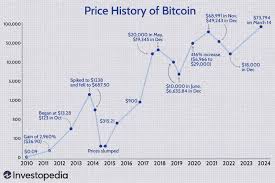
Bitcoin’s Journey: From 2009 to 2024 – Key Milestones and Future Outlook”

Here is a step-by-step history of **Bitcoin** from its inception in **2009** up to **September 2024

1. 2008 – The Idea
– In **October 2008**, a whitepaper titled “Bitcoin: A Peer-to-Peer Electronic Cash System” was published by an unknown person or group using the pseudonym **Satoshi Nakamoto**.
– The goal was to create a decentralized digital currency, free from government control, relying on **blockchain technology** to secure transactions.

2. 2009 – Bitcoin Launches
– In **January 2009**, the **Bitcoin network** was launched. The first block, known as the **Genesis Block**, was mined by Nakamoto.
– Bitcoin had no initial market value; it was mainly traded among cryptography enthusiasts.

3. 2010 – First Real-World Transaction
– In **May 2010**, the first known Bitcoin transaction for real-world goods took place when **Laszlo Hanyecz** bought two pizzas for **10,000 BTC**. This day is now celebrated as **Bitcoin Pizza Day**.
– By the end of 2010, Bitcoin’s value had risen to **$0.08 per BTC**.

4. 2011 – Reaching Parity with USD
– In **2011**, Bitcoin reached parity with the **U.S. dollar** for the first time. It started gaining more attention, especially in tech circles.
– Other cryptocurrencies like **Litecoin** and **Ethereum** began emerging as Bitcoin alternatives (altcoins).

5. 2013 – Early Bull Run
**2013** saw Bitcoin’s first major price surge. It went from **$13** in January to over **$1,000** by December. The rise was partly due to growing interest from investors and media.
– This year also marked the fall of **Mt. Gox**, a large Bitcoin exchange, after it lost 850,000 BTC in a hack.

6. 2017 – Historic Bull Run
– Bitcoin reached new heights in **2017**, hitting an all-time high of **$20,000** in December.
– Factors driving this were increased retail and institutional interest, Initial Coin Offerings (ICOs), and Bitcoin’s growing mainstream recognition.

7. 2018 – Bear Market
After the 2017 bull run, **2018** saw Bitcoin’s price crash, dropping to **$3,200** by December.
– This was due to market corrections, regulatory scrutiny, and the bursting of the ICO bubble.

8. 2020-2021 – Institutional Adoption

**2020** was a landmark year with institutional adoption picking up pace. Companies like **MicroStrategy** and **Tesla** started buying Bitcoin as a hedge against inflation.

– Bitcoin’s price soared in **2021**, reaching a new all-time high of **$64,000** in April 2021, driven by the broader economic response to the COVID-19 pandemic and increasing demand.

9. 2022 – Market Downturn
– Bitcoin, along with other cryptocurrencies, entered a **bear market** in **2022** due to global economic uncertainty, rising inflation, and interest rate hikes by central banks.
– Bitcoin’s price dropped to around **$17,000** by the end of 2022.

10. 2023 – Recovery and Halving Anticipation**
– Bitcoin began a gradual recovery in **2023**, largely due to anticipation of the upcoming **2024 halving**, an event that halves the reward miners receive for adding new blocks to the Bitcoin blockchain.
– By the middle of 2023, Bitcoin’s price had recovered to around **$30,000

11. 2024 – New All-Time Highs
– In **March 2024**, Bitcoin hit a new all-time high of **$73,737** as enthusiasm for the 2024 halving event surged.
– By **September 2024**, Bitcoin’s price had corrected to around **$56,000**. Analysts predict two scenarios for the rest of the month: either a bullish rally up to **$68,000**, or a potential dip to **$50,000** before a recovery .

Summary
Bitcoin has evolved from a niche digital currency to a mainstream financial asset. It has undergone several bull and bear cycles, driven by factors such as technological advancements, regulatory shifts, market sentiment, and macroeconomic trends. With its **2024 halving** on the horizon, Bitcoin continues to draw attention from investors and institutions worldwide.

https://www.instagram.com/raj78verma?igsh=MWRqMDNtNDNna3BuOA==